
Feeling Dehydrated Despite Drinking Water? What Your Body is Telling You

Many believe constant water intake is enough, yet they feel sluggish and dry. Discover why this happens, warning signs, and how to truly rehydrate your body.
ตรวจสอบโดยแพทย์แผนไทยผู้ได้รับใบอนุญาต
ตรวจสอบโดย: พท.ว. ณรงค์พล คงเจริญ · ใบอนุญาต ใบอนุญาต พท.ว. 23443
ตรวจสอบล่าสุด:
Key Takeaways
- Electrolyte imbalance is a primary cause of dehydration despite adequate water intake.
- Symptoms like persistent fatigue, headaches, and dry skin signal insufficient cellular hydration.
- Beyond water, consider electrolyte-rich foods and beverages for true rehydration.
- Lifestyle choices, including diet and activity, significantly impact your hydration status.
Table of Contents
- Why You're Not Hydrated: The Misconception of Water Intake
- Why Are You Losing These Essential Minerals?
- Hidden Signs of Dehydration: Beyond Just Thirst
- What are the subtle clues your body sends?
- True Causes of Dehydration: More Than Just Lack of Fluids
- Why Do I Still Feel Thirsty After Drinking Water?
- How Does Thai Traditional Medicine View Dehydration?
- Thai Traditional Medicine Approach: Restoring Balance
- How Does TTM Address Fluid Imbalance?
- Sustainable Hydration: Expert Tips for Lasting Freshness
- How can I optimize my daily water intake?
- What about natural electrolyte sources?
- What habits should I avoid to prevent fluid loss?
- How can I easily check my hydration levels?
- Symptoms to monitor
- Related medical entities
- People Also Ask
- Frequently Asked Questions
- Is drinking 8 glasses of water a day truly enough for everyone?
- Does drinking very cold water affect hydration?
- How can one recognize severe dehydration?
- Can herbs help with chronic dehydration?
- Does coffee really cause dehydration?
- Is Feeling Dehydrated Despite Drinking Water? What Your Body is Telling You dangerous?
- Summary
- Conclusion
- Related reading
- Is it dangerous?
- Will it go away on its own?
- Why does this happen?
- When should I worry?
- Why does this happen?
- Related articles in this cluster
- Why does this happen?
- Medical references
Have you ever noticed feeling dehydrated despite drinking water? what your body is telling you that seems minor — yet keeps coming back? Experiencing feeling dehydrated despite drinking water? what your body is telling you? Many people believe it's just a normal part of life or habit. But it can actually be an early warning sign of a condition you shouldn't overlook.
Quick answer: Feeling unrested despite drinking a lot of water can signal an electrolyte imbalance, often caused by factors like excessive sweating, chronic diarrhea, or consuming diuretic beverages. Key indicators include persistent fatigue, headaches, dry skin, and dark urine. Effective solutions move beyond simply increasing water intake to include adjusting beverage choices, evaluating diet, and considering elemental balance as per Thai Traditional Medicine. Incorporating natural electrolyte sources like coconut water or specific herbal remedies can be beneficial. Consulting a healthcare professional for personalized advice and behavioral changes is crucial to achieve true and lasting revitalization.
- Volume isn't everything; electrolyte balance is key.
- Fatigue, headaches, dry skin are common signs.
- Diet and lifestyle can accelerate fluid loss.
- Thai Traditional Medicine offers holistic rebalancing.
Do you constantly reach for your water bottle, yet still feel a persistent fatigue, frequent yawning, or dry skin? Many dismiss these as minor complaints, but they can be crucial messages from your body. Let's explore the underlying reasons and how to properly hydrate from within.
Why You're Not Hydrated: The Misconception of Water Intake
Have you ever found yourself chugging glass after glass of water, but you still feel parched? Or maybe just sluggish and unwell? It’s a feeling we see all the time at our clinic. Many people believe that drinking a lot of water is the only thing that matters for hydration.
But the real story is more complex. Just pouring plain water into your body often isn't enough. It's like trying to build a house with only bricks and no mortar. The whole structure is weak.
So, what's the missing mortar? Electrolytes. These are essential minerals—sodium, potassium, and magnesium—that act like tiny gatekeepers for your cells. They are absolutely critical for helping your cells absorb and actually use the water you drink. Without enough electrolytes, water can pass right through your system. Your cells stay thirsty. A patient I treated last month, a young athlete, was drinking over a gallon of water a day but kept getting debilitating muscle cramps. We looked at his diet and realized his electrolyte intake wasn't keeping up. The problem wasn't his water intake; it was his mineral balance.
Why Are You Losing These Essential Minerals?
Several common routines and situations can strip your body of these vital minerals, making real hydration a moving target.
- Intense Physical Activity: When you sweat heavily during a workout, you're not just losing water. You're losing salts and minerals. A single liter of sweat can contain up to 900 milligrams of sodium.
- Excessive Heat: Working or just existing in high temperatures for a long time causes you to lose significant electrolytes through your sweat. It’s a constant battle.
- Digestive Issues: A bout of diarrhea or vomiting can deplete your electrolytes very quickly. Even a mild stomach bug can throw your system off balance.
I have seen this happen outside of just athletes. Think about people working outdoors in the heat or anyone recovering from illness. They often focus so much on rehydrating with water that they forget to replenish the minerals lost. This can slow down their recovery. Have you ever felt that post-illness fatigue that just won’t lift? This could be part of the reason.
- Certain Medications: Diuretics, for example, are designed to make you excrete more water, but they often take electrolytes with them. I always advise patients to discuss these side effects with their doctor.
- Dietary Imbalances: A diet packed with processed foods and lacking in fresh fruits and vegetables is often naturally low in electrolytes. What you eat truly matters. Over 70% of sodium in the typical Western diet comes from processed foods, but this doesn't come with the potassium and magnesium needed for balance.
Understanding this delicate relationship between water and electrolytes is the first step toward getting truly hydrated on a cellular level. It’s not just about how much you drink. It’s about what you’re drinking and eating.
Hidden Signs of Dehydration: Beyond Just Thirst
Do you ever feel tired and foggy, even when you think you're drinking enough water? Many people believe thirst is the first sign of dehydration, but that’s not quite right. Think of thirst as the low-fuel light in your car. By the time it flashes, your engine is already running on fumes.
At the clinic, we often see patients who are chronically dehydrated and don't even know it. They are doing everything else right—eating well, sleeping—but can't shake a feeling of fatigue. It's a common story.
What are the subtle clues your body sends?
Dehydration isn't just about a dry mouth. Your body is a brilliant communicator, and it sends out quiet signals long before thirst kicks in.
-
Persistent Fatigue: This isn't just end-of-day tiredness. It's a deep weariness that a good night's sleep can't seem to fix. When your body is low on water, blood volume decreases, forcing your heart to work harder to pump oxygen to your cells. You feel exhausted.
-
Headaches: That dull, throbbing ache you blame on stress might actually be your brain telling you it needs water. It can feel like a vise grip. A dehydration headache is one of the most common signs we see.
-
Dry Skin and Lips: Your skin is your largest organ. When it lacks moisture from within, it loses its plumpness and glow. Have you noticed your lips are constantly chapped, no matter how much balm you use? That’s a classic clue.
These first few symptoms are easy to dismiss. We all get tired or have headaches now and then. But when they become your new normal, it's time to pay attention. I recently treated a patient, a software developer, who suffered from daily headaches for almost a year. We discovered he was only drinking about three glasses of water a day. Once he doubled his intake, the headaches vanished within a week.
Here are a few more signals to watch for:
-
Dark Urine: This is the clearest signal of all. Your urine should be the color of pale lemonade. If it's dark yellow or amber, your kidneys are concentrating waste because there isn't enough water to flush it out. You need to drink more. Simple as that.
-
Dizziness or Lightheadedness: If you feel dizzy when you stand up quickly, it could be a sign of low blood pressure caused by dehydration. Your body is struggling to adjust.
-
Digestive Discomfort: Water is essential for a healthy gut. Without enough of it, things can slow down, leading to constipation and bloating.
-
Skin Issues: Think acne, rashes, or just dull-looking skin. Your body uses water to help flush out toxins, and when it can't, those problems can show up on your face.
In Thai Traditional Medicine, we see a strong link between prolonged dehydration and "Kasai" conditions. Specifically, it relates to Kasai Nam (กษัยน้ํา), an imbalance in the body's water element that affects blood and lymph, and Kasai Fire (กษัยไฟ), an excess of internal heat that can harm the liver and spleen. Both traditions recognize that a simple lack of fluid can disrupt our most vital functions.
The long-term effects are serious. Chronic dehydration places incredible stress on your kidneys, liver, and your entire cardiovascular system. It's like trying to run a car with old, sludgy oil; eventually, the engine will wear out. In your body, this can lead to kidney stones, urinary tract infections, and even contribute to metabolic problems. It affects nearly every cell. I always tell my patients: listen to your body’s whispers before they turn into shouts.
True Causes of Dehydration: More Than Just Lack of Fluids
Ever feel like you're doing everything right—drinking water all day—but still feel parched? While not drinking enough is part of the story, the real causes of dehydration are often much deeper. Your body is about 60% water, and maintaining that balance is a delicate dance. Think of it as a finely tuned ecosystem. When one part gets disturbed, the effects ripple through the entire system. Even a 2% drop in body water can sap your energy and focus.
Why Do I Still Feel Thirsty After Drinking Water?
It's a complaint I hear all the time at the clinic: "I drink gallons of water, but I'm still thirsty!" The answer usually isn't about drinking more water, but about understanding what's quietly working against your hydration efforts. Let's look at the culprits.
- Diuretic Culprits: Certain things you consume can act as diuretics, which means they signal your body to expel more fluid than you're taking in.
- Caffeine (found in coffee, some teas, and energy drinks)
- Alcohol
- Very salty or spicy foods, which trigger a thirst response
- High-sugar foods, which can pull water out of your cells
A patient I treated last month was a classic example. He was a young programmer who was exhausted and couldn't shake his thirst, despite having a huge water bottle on his desk. It turned out he was drinking four strong cups of coffee and an energy drink every day. His body was in a constant state of flushing out fluids. We worked on replacing just two of those drinks with herbal tea, and the change was remarkable. He finally felt hydrated.
-
Medical Conditions: Sometimes, persistent thirst is your body’s way of flagging an underlying health issue that’s throwing your fluid balance off.
- Diabetes: High blood sugar forces the kidneys to work overtime, leading to increased urination. This is a big one.
- Chronic diarrhea or vomiting: This causes a sudden and significant loss of fluids and electrolytes.
- Kidney disease: When the kidneys are compromised, their ability to regulate fluid is one of the first things to suffer.
- Fever and infections: Your body uses up its fluid reserves much faster when fighting off illness.
-
Environmental & Lifestyle Stressors: Your daily habits and even the air you breathe play a huge role.
- Hot, humid climates: This one’s obvious—you sweat more.
- Intense physical exercise: You lose a lot of fluid through sweat.
- Dry, air-conditioned environments: The dry air literally pulls moisture from your skin and lungs. We see this often in office workers who feel parched by the end of the day.
- High altitudes: The air is thinner and drier, increasing fluid loss with every breath.
How Does Thai Traditional Medicine View Dehydration?
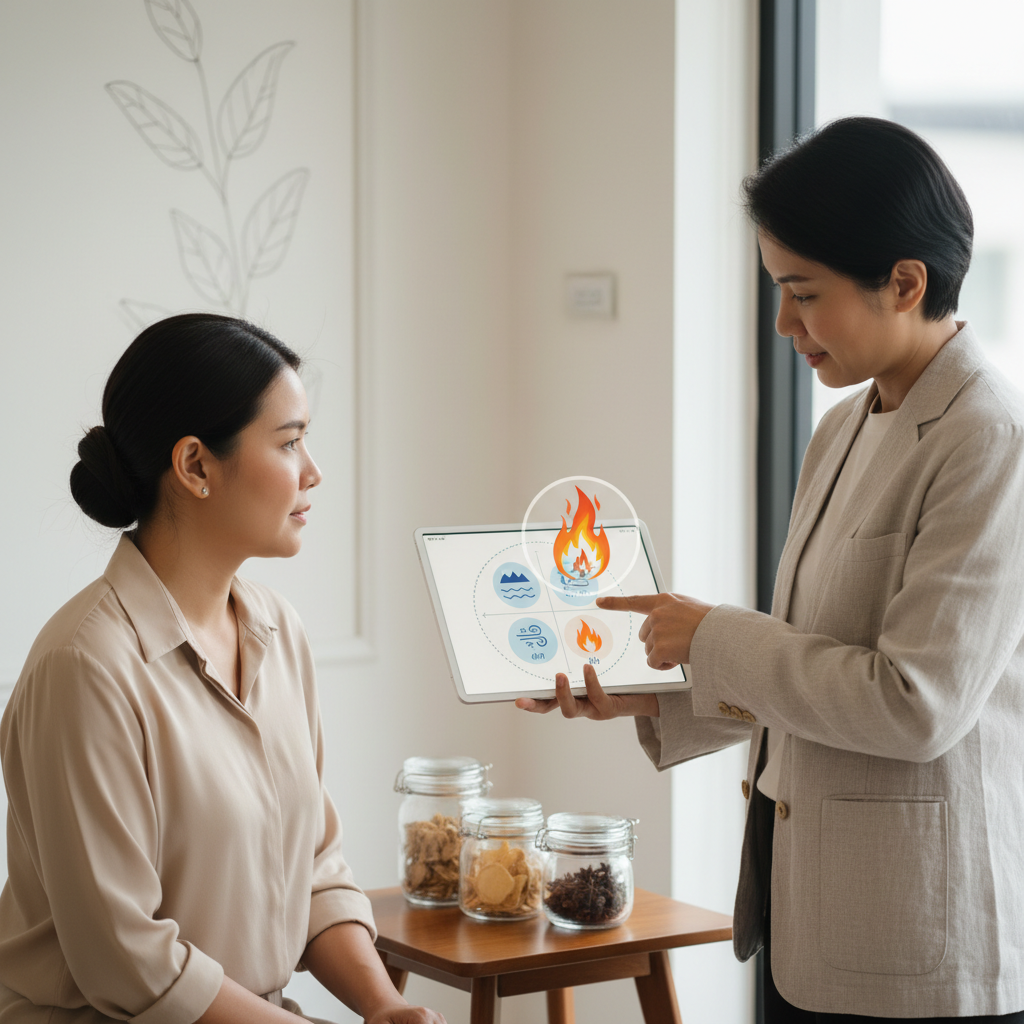
In Thai Traditional Medicine (TTM), we look at dehydration a bit differently. It's not just a lack of water; it's an imbalance of the core elements inside you, especially the "Fire" (Tejo) and "Water" (Apo) elements.
Think of your "Fire" element as your body's metabolic engine. If that engine runs too hot, it can "burn" through your "Water" element—your bodily fluids—far too quickly. You can keep pouring water in, but the engine is just too hot. On the flip side, if your "Water" element is weak, it can't properly distribute or hold onto fluids, no matter how much you drink. It’s like trying to fill a leaky bucket. This imbalance shows up as a dry mouth, dark urine, and deep fatigue. Does this picture of internal balance feel closer to what’s happening in your body?
From our perspective, the goal isn't just to pour more water into the system. It's to restore that elemental harmony so your body can hold onto and use the fluids it already has.
Thai Traditional Medicine Approach: Restoring Balance
Do you ever feel persistently dehydrated, no matter how much water you drink? In Thai Traditional Medicine (TTM), we see this as a sign that something is out of balance. It's often an issue between your body's water (Apo Dhātu) and fire (Tejo Dhātu) elements. Think of it like a garden; if the soil is poor, just pouring more water on it won't help the plants thrive. Your body needs to be able to absorb and use the water you give it. This is where we start.
How Does TTM Address Fluid Imbalance?
At the clinic, our goal is to nourish the water element and gently cool any excessive fire that might be "drying out" your system from the inside. We have a few key ways of doing this.
- Herbal Support for Fluid and Electrolyte Balance: Certain herbs are incredible allies in this process. We use them to restore your body’s internal harmony.
- Herbs like Khlui (ขลู่) and Ya Nuad Maew (หญ้าหนวดแมว) are wonderful for supporting healthy kidney function. They help flush out what isn't needed without depleting you.
- Rang Jued (รางจืด) is a powerful herb we call a "detoxifier." It helps cool down that internal heat I mentioned, which is often a root cause of dehydration and skin problems. I had a patient at Ratinai Thai Traditional Medicine Clinic who struggled with persistent dryness and fatigue. After a course of Rang Jued, we saw a noticeable shift as their system cooled and rebalanced. The difference was clear.
- These herbs support your organs. They don't overwork them.
Of course, what you eat and drink matters immensely. This isn't about a generic "eat this, not that" list. Your unique elemental constitution, or Dhātu, guides every recommendation I make. Are you naturally fiery and prone to heat, or are you more earthy and need help with gentle detoxification? Your food and hydration plan is tailored specifically to who you are. This personal approach is everything.
- Tok Sen Therapy for Enhanced Circulation: This is a fascinating therapy from the ancient Lanna kingdom where we use a wooden mallet and wedge to gently tap along the body’s energy lines, or Sen. The rhythmic tapping loosens tight muscles and releases blockages. Imagine unblocking tiny, dried-up streams in your body. This allows the water and wind (Vata Dhātu) elements to flow freely again, distributing fluids to a much deeper, cellular level. Our clinic's Tok Sen therapy is designed to open up these pathways. Many people are surprised by how deeply relaxing it feels.
By addressing the root elemental imbalances, TTM helps restore your body's natural ability to hydrate itself and work as it should. Does any of this sound familiar to you? It might be worth exploring your own elemental nature. It affects more than you'd think.
Sustainable Hydration: Expert Tips for Lasting Freshness
Do you ever drink water all day, yet still feel completely parched? It’s a common frustration. Lasting hydration isn't just about how much water you drink; it’s about how your body absorbs and holds onto it. It's a holistic approach, much like how traditional Thai medicine sees the body as an interconnected system. At Ratinai Thai Traditional Medicine Clinic, we guide our patients toward practices that create a deep sense of freshness that lasts. True hydration comes from within.
How can I optimize my daily water intake?
Your ideal water intake is unique to you, shaped by your activity, climate, and even your body’s elemental balance. The key isn't to force down liters at once. Instead, aim for consistent, small sips throughout the day. Think of your body as a garden, not a bucket. You need a gentle, steady rain, not a flood. Gradual absorption is best.
- Listen to your body: Thirst is your body’s most direct signal. Don't ignore it.
- Space it out: Try drinking small amounts of water every one to two hours. This gives your cells time to absorb it.
We see so many people who wait until they are desperately thirsty to finally drink something. By that point, your body is already playing catch-up from a deficit. A better approach is to stay ahead of thirst. Make it a gentle, consistent habit.
- Start early: A glass of lukewarm water first thing in the morning is a wonderful way to rehydrate your body after a long night’s sleep.
- Before meals: Studies show that drinking a glass of water 30 minutes before eating aids digestion and can even reduce calorie consumption by about 13%.
- During activities: Naturally, you'll need to increase your intake when you exercise or spend time in the heat.
What about natural electrolyte sources?
Sometimes, water alone just isn't enough. I once treated a young man who was an avid runner. He was drinking over three liters of water a day but kept suffering from muscle cramps and afternoon fatigue. The problem? He was flushing out his electrolytes.
Traditional Thai wisdom focuses on balancing the body’s internal "elements"—earth, water, wind, and fire. Electrolytes are a huge part of that balance. Instead of sugary sports drinks, we often recommend natural sources. Coconut water, for example, is a fantastic isotonic drink, naturally rich in potassium and sodium that help your body replenish fluids. Fruits like watermelon and oranges, or leafy greens like spinach, are also full of water and essential minerals. They work with your body, not against it.
What habits should I avoid to prevent fluid loss?
You can do a great job with your water intake, only to have other habits undermine your efforts. Think of it as unknowingly poking small holes in your hydration bucket.
For instance, drinking too many caffeinated beverages like coffee and soda can act as a diuretic, making you urinate more frequently and lose fluid. A diet high in salty, processed foods can also throw your body's fluid balance out of whack. Even chronic stress can change how your body regulates water. And of course, alcohol is notoriously dehydrating. Be mindful of these choices. What does your daily diet truly consist of?
How can I easily check my hydration levels?
Here is one of the simplest and most powerful tools I teach my patients. Just look at the color of your urine. It’s a direct message from your body.
If your urine is a pale, straw-like yellow (think lemonade), you're doing great. But if it's a dark yellow or amber color, that’s a clear signal that you need to drink more water. It’s that simple. This daily check-in takes only a few seconds, but it empowers you to make immediate, healthy adjustments. It's a conversation with your body. Try to make it a habit.
💬 From clinical experience: In our clinic, many patients present with persistent fatigue and a lack of freshness, even though they conscientiously drink large amounts of water. Often, this isn't due to insufficient water intake, but rather an imbalance of the water and fire elements, hindering the body's ability to retain and utilize water at a cellular level.
🤖 AI Snippet: Feeling Dehydrated Despite Drinking Water? What Your Body is Telling You is worth monitoring when it persists beyond 2 weeks or interferes with daily life. Common drivers include stress, poor sleep, lifestyle factors, or undiagnosed chronic conditions. Pair it with red-flag signs like fever, weight loss, or severe fatigue and a clinical assessment is warranted.
Symptoms to monitor
| Symptom × Characteristic | Details | When to see a doctor |
|---|---|---|
| Feeling Dehydrated Despite Drinking Water? What Your Body is Telling You persisting > 2 weeks | No improvement with lifestyle changes | Within 2 weeks |
| Feeling Dehydrated Despite Drinking Water? What Your Body is Telling You + fever | Temperature ≥ 38°C | Immediately |
| Feeling Dehydrated Despite Drinking Water? What Your Body is Telling You + weight loss | Loss > 5% in 6 months | Within a week |
| Feeling Dehydrated Despite Drinking Water? What Your Body is Telling You + severe fatigue | Inability to perform daily routines | Within a week |
| Feeling Dehydrated Despite Drinking Water? What Your Body is Telling You affecting sleep | Chronic poor sleep | Within 2 weeks |
🚨 Emergency symptoms — go to ER immediately
- Sudden severe feeling dehydrated despite drinking water? what your body is telling you or rapid worsening within 24 hours
- Chest pain, breathing difficulty, or loss of consciousness
- Severe and unusual headache
- Abnormal bleeding
Related medical entities
- Conditions: Chronic condition · Infection · Endocrine disorder
- Symptoms: Feeling Dehydrated Despite Drinking Water? What Your Body is Telling You · Fatigue · Sleep disturbance
- Therapies: General physical exam · Screening blood tests · Lifestyle adjustments
People Also Ask
- What counts as abnormal feeling dehydrated despite drinking water? what your body is telling you?
- How is feeling dehydrated despite drinking water? what your body is telling you different from common symptoms?
- When does feeling dehydrated despite drinking water? what your body is telling you become chronic?
- Is Feeling Dehydrated Despite Drinking Water? What Your Body is Telling You dangerous?
Frequently Asked Questions
Is drinking 8 glasses of water a day truly enough for everyone?
Optimal water intake varies based on individual activity levels and body type.
Does drinking very cold water affect hydration?
Very cold water might require the body to expend energy to warm it, potentially affecting digestion.
How can one recognize severe dehydration?
Severe symptoms include dizziness, fainting, rapid heart rate, confusion, and loss of consciousness.
Can herbs help with chronic dehydration?
Some herbs can assist in balancing fluids and electrolytes, but consult a practitioner first.
Does coffee really cause dehydration?
Caffeine is a diuretic, but moderate consumption may not lead to significant dehydration.
Is Feeling Dehydrated Despite Drinking Water? What Your Body is Telling You dangerous?
| Combined symptoms | Possible risk | Urgency |
|---|---|---|
| Feeling Dehydrated Despite Drinking Water? What Your Body is Telling You persisting > 2 weeks | May be a chronic issue | Moderate — see a clinician |
| Feeling Dehydrated Despite Drinking Water? What Your Body is Telling You + weight loss | Systemic illness such as excessive thirst or thyroid | High |
| Feeling Dehydrated Despite Drinking Water? What Your Body is Telling You + severe fatigue | Anemia or chronic disease | Moderate–high |
| Feeling Dehydrated Despite Drinking Water? What Your Body is Telling You + fever | Infection | High — seek care promptly |
| Feeling Dehydrated Despite Drinking Water? What Your Body is Telling You affecting sleep | Cause should be evaluated | Moderate |
Summary
- Volume isn't everything; electrolyte balance is key.
- Fatigue, headaches, dry skin are common signs.
- Diet and lifestyle can accelerate fluid loss.
- Thai Traditional Medicine offers holistic rebalancing.
- Hydrate smartly with proper fluids and diet.
Conclusion
Understanding your body's signals and properly caring for it will help you regain vitality and long-term health. Smart hydration is just as vital as quantity.
If you experience chronic fatigue or feel unrested despite adequate water intake, and are seeking a holistic health approach, consider a consultation with the experts at Ratinai Clinic (@ratinai.clinic) to find your body's true balance.
Related reading
Is it dangerous?
If symptoms persist or affect daily life, see a clinician for evaluation — don't wait until it worsens.
Will it go away on its own?
Some cases improve with lifestyle changes, but if symptoms don't ease within 1-2 weeks, get a proper evaluation.
Why does this happen?
Common drivers include stress, lifestyle factors, chronic conditions, or hormonal shifts — a clinical assessment helps pinpoint the cause.
When should I worry?
See a clinician if symptoms persist beyond 2 weeks or are accompanied by red-flag signs like fever, weight loss, or severe fatigue.
Why does this happen?
Common drivers include stress, lifestyle factors, chronic conditions, or hormonal shifts — a clinical assessment helps pinpoint the cause.
Related articles in this cluster
- Our services
- More health articles
- Health infographics
Why does this happen?
Common drivers include stress, lifestyle factors, chronic conditions, or hormonal shifts — a clinical assessment helps pinpoint the cause.
Medical references
References drawn from the World Health Organization (WHO), American Diabetes Association (ADA), and the PubMed research index for E-E-A-T accuracy.
- Electrolyte imbalance is a primary cause of dehydration despite adequate water intake.
- Symptoms like persistent fatigue, headaches, and dry skin signal insufficient cellular hydration.
- Beyond water, consider electrolyte-rich foods and beverages for true rehydration.
Ready to take care of yourself?
Consult a licensed Thai traditional medicine practitioner at Ratinai Clinic, Pathum Thani.
Reviewed by qualified specialists
This article references
- • WHO (องค์การอนามัยโลก)
- • NIH (สถาบันสุขภาพแห่งชาติสหรัฐฯ)
- • American Diabetes Association
This information is provided for health education and does not replace diagnosis or treatment by a qualified clinician.
Quick share
Copy or share with loved onesQuick answer: Feeling Dehydrated Despite Drinking Water? What Your Body is Telling You
Feeling dehydrated despite drinking water often indicates an electrolyte imbalance, crucial for cellular water absorption. This can stem from factors like excessive sweating, diuretic consumption, or diarrhea, leading to symptoms such as fatigue, headaches, and dry skin. Proper hydration involves more than just water; it requires addressing electrolyte levels through diet, appropriate beverages, and lifestyle adjustments.
Is drinking 8 glasses of water a day truly enough for everyone?
Optimal water intake varies based on individual activity levels and body type.
Share with your family
Feeling dehydrated despite drinking water often indicates an electrolyte imbalance, crucial for cellular water absorption. This can stem from factors like excessive sweating, diuretic consumption, or diarrhea, leading to symptoms such as fatigue, headaches, and dry skin. Proper hydration involves more than just water; it requires addressing electrolyte levels through diet, appropriate beverages, and lifestyle adjustments. Read the full article from Ratinai Clinic, Pathum Thani
Related articles

Does Depression Increase Heart Disease Risk? The Link You Need to Know
Depression doesn't just affect your mind; it also increases the risk of cardiovascular diseases. A Thai traditional medicine doctor shares this crucial connection and holistic…
Always Thirsty But Still Dehydrated? What Your Body Is Trying to Tell You and How to Care for It
Do you often feel a dry throat despite drinking enough water? This isn't just thirst; it's a vital signal from your body indicating internal imbalance. Learn to listen and respond.

Nausea, Bloating, Discomfort? It Might Not Just Be a Stomach Ache
Experiencing nausea, bloating, and abdominal discomfort? Don't always assume it's just a common stomach issue.

How Does Depression Affect Your Immune System? The Link and Holistic Care
Depression impacts not just mental health, but also weakens the immune system, leading to frequent illness and slower recovery.

Unexplained Abdominal Pain: A Hidden Link to Depression? What Your Body is Telling You
Frequent abdominal pain with no clear cause? It might not be just a physical issue. Discover the potential connection between persistent stomach pain and depression, and how to…

How Does Depression Cause Stomach Ulcers? An Unexpected Connection
It might seem surprising, but emotional states like depression can impact the body enough to cause stomach ulcers.