
Can Depression Really Cause Overeating? Understanding Symptoms, Causes, and Thai Traditional Medicine Approaches

Depression isn't just about feeling sad; it can significantly impact eating habits, leading to either undereating or overeating.
ตรวจสอบโดยแพทย์แผนไทยผู้ได้รับใบอนุญาต
ตรวจสอบโดย: พท.ว. ณรงค์พล คงเจริญ · ใบอนุญาต ใบอนุญาต พท.ว. 23443
ตรวจสอบล่าสุด:
Key Takeaways
- Depression can alter eating habits, leading to over or under-eating patterns.
- Neurotransmitter imbalances and chronic stress are key contributors to these changes.
- Emotional eating provides temporary comfort and stress relief from depressive symptoms.
- Recognizing emotional eating, guilt, and other symptoms is vital for seeking help.
- Thai herbs like turmeric and Centella asiatica may help balance mood.
Table of Contents
- How Does Depression Affect Eating Behaviors?
- Why do I eat more when I'm feeling down?
- Recognizing Eating Changes Linked to Depression
- What Eating Patterns Suggest a Deeper Issue?
- Are There Other Symptoms to Watch For?
- Causes and Risk Factors of Depression Affecting Eating
- Do Genes Play a Role?
- What Happens in the Brain?
- Can Life Events Trigger It?
- How Does Personality Factor In?
- Thai Traditional Medicine for Mental Well-being and Eating Habits
- How do dominant elements (ธาตุเจ้าเรือน) affect my mood?
- What Thai herbs can help with mood and eating?
- Can massage or herbal steaming help?
- Self-Care Strategies to Manage Emotions and Eating
- How can I understand my emotional eating patterns?
- Symptoms to monitor
- Related medical entities
- People Also Ask
- Frequently Asked Questions
- Can unusually high food intake truly be a sign of depression?
- Can Thai herbs help reduce stress-induced appetite?
- Should I consult a Thai Traditional Medicine practitioner or a psychiatrist first if I suspect depression with overeating?
- Can depression affecting eating habits be completely cured?
- Are there simple ways to identify if my eating habits are emotionally driven?
- Is Can Depression Really Cause Overeating? Understanding Symptoms, Causes, and Thai Traditional Medicine Approaches dangerous?
- Summary
- Conclusion
- Is it dangerous?
- Will it go away on its own?
- Why does this happen?
- When should I worry?
- Related articles in this cluster
- Medical references
Have you ever noticed can depression really cause overeating? understanding symptoms, causes, and thai traditional medicine approaches that seems minor — yet keeps coming back? Experiencing can depression really cause overeating? understanding symptoms, causes, and thai traditional medicine approaches? Many people believe it's just a normal part of life or habit. But it can actually be an early warning sign of a condition you shouldn't overlook.
Quick answer: Depression can indeed lead to abnormal eating behaviors, including both overeating and undereating. This often stems from an imbalance of neurotransmitters in the brain, such as serotonin and dopamine, and the effects of chronic stress on appetite-regulating hormones. Such changes in eating patterns can be a coping mechanism for managing emotions, providing temporary comfort or stress relief. Key signs to watch for include eating out of boredom, stress, or sadness, followed by feelings of guilt, alongside other symptoms like fatigue, insomnia, or a general loss of interest. Recognizing these signals is crucial for seeking professional help.
- Depression can alter eating habits, leading to over or under-eating.
- Caused by neurotransmitter imbalances and chronic stress.
- Thai herbs like turmeric and Centella asiatica can help balance mood.
- Self-care (exercise, mindfulness) and professional help are vital.
Many people associate depression solely with persistent sadness, but this condition is far more complex. Its symptoms extend beyond emotions, affecting our bodies and daily routines, including our eating habits. Have you ever wondered why some individuals with depression tend to eat more, or even compulsively?
How Does Depression Affect Eating Behaviors?
At the clinic, we see the connection between mood and food all the time. It’s not just about feeling sad. Depression can completely change your relationship with food. Many patients come to me describing changes they just can’t understand. It can be very confusing.
Why do I eat more when I'm feeling down?
Depression can flip a switch on your appetite. I remember one patient, a young man who loved to cook, who told me that when his depression hit, he couldn't even look at food and lost a lot of weight. But for many others, it’s the exact opposite. They start overeating. This isn’t just enjoying a big meal; it's a powerful, often uncontrollable urge to eat, even when you're not physically hungry. It feels like the only thing that helps.
So what’s happening inside your body? It's really about your brain chemistry. Think of chemicals like serotonin and dopamine as your brain's mood managers. When you are depressed, these can get out of balance. Low serotonin, for example, can make you crave starchy or sugary foods. Why? Because eating those carbs gives you a quick, temporary serotonin boost. It’s a moment of relief.
Then there's stress, which almost always comes with depression. Stress messes with your hormones, especially one called cortisol. This "stress hormone" can rev up your appetite, making you crave high-calorie comfort foods. It is a tough cycle to break. You eat to feel a little better, but then the guilt sets in, and you end up feeling even worse than before.
I often hear about overwhelming cravings for "comfort foods" high in sugar or fat. A patient once told me, "Doc, it's like my body isn't mine. It just screams for chocolate." That powerful feeling of being out of control around food is very common. You might find yourself eating just to numb your feelings, even when your stomach isn't empty.
Other signs we see are:
- Binge eating episodes: This is when you eat a large amount of food very quickly.
- Changes in weight: This can be either significant weight gain or loss.
The most important thing I tell my patients is this: it is not a lack of willpower. These changes are a symptom of what's happening inside you. It is your body's way of coping. Have you noticed these patterns in your own eating? Just understanding why this is happening is the very first step to finding your way back to balance.
Recognizing Eating Changes Linked to Depression
At the clinic, I often talk with people about how their heart and their stomach are connected. When someone feels heavy with sadness, it changes how they eat. It's not always about a loss of appetite, though that happens. For many, it's the complete opposite. They might find themselves eating much more, or grazing all day. Your body starts to crave those quick-fix comfort foods, like sweets and breads. It's a very common story. Have you noticed yourself reaching for sugar more lately?
What Eating Patterns Suggest a Deeper Issue?
Look, everyone eats when they're stressed out sometimes. That's just being human. But I want you to watch for when it becomes your main way of handling life. That’s when we need to pay attention. The pattern often looks like one of these:
- You eat because you’re bored. Food becomes the only interesting thing when everything else feels flat.
- You eat to calm anxiety. This is a big one. It's using food as medicine for worry.
- You eat to numb your feelings. It’s easier to eat a meal than to feel sad or angry.
- You feel guilty after eating. This is a key sign. You feel awful right after, which just feeds the sadness.
I think of a patient who came to see me last month. She was a lovely woman in her 40s, and her main complaint was just feeling tired all the time. But as we talked, the real story came out. She told me she had gained 15 kilograms in just six months. Every night, she found herself eating snacks without control, and then she'd feel this wave of guilt. That guilt just made her original sadness so much worse. It's a powerful and exhausting cycle. I see it often.
Are There Other Symptoms to Watch For?
These changes in eating don't happen in a vacuum. They are almost always friends with other symptoms. When we suspect depression is the root cause, we also look for these other signs in your life:
- A feeling of sadness that just won't leave.
- Losing interest in things you used to love. The joy is gone.
- Sleep problems—either you can't sleep, or you can't seem to wake up.
- Feeling tired deep in your bones. No amount of rest helps.
- Brain fog. You have trouble focusing, and even small decisions feel overwhelming.
Remember, eating a cupcake after a bad day doesn't mean you're depressed. But if your eating habits have changed dramatically, and you see yourself in several of the symptoms we just discussed for more than two weeks, that's your body sending a signal. It's a sign that it's time to talk to someone. Please don't carry this alone. We're here to help you figure it out.
Causes and Risk Factors of Depression Affecting Eating
At the clinic, when someone comes to us feeling down and their appetite is all over the place, we know it's never just one thing. Depression is complicated. It’s like a tangled knot of different threads, and those same threads can pull on your eating habits. We find that untangling this together is the first step.
Do Genes Play a Role?
Yes, family history can definitely be part of the story. If your parents or siblings have struggled with depression, you might have a higher chance of experiencing it too. It’s a predisposition, not a guarantee. This doesn't mean it's your destiny. It just means we need to be mindful.
What Happens in the Brain?
A big piece of the puzzle is what’s happening in your brain. Think of it like this: your brain has chemical messengers, like serotonin and noradrenaline, that help manage your mood. When you're depressed, these messengers aren't working as well as they should. They get out of balance. This can make you feel sad, tired, and completely change your appetite. For some, food loses all its appeal. For others, eating is the only thing that feels comforting. Both are very common.
Can Life Events Trigger It?
Absolutely. Big life events and ongoing stress are powerful triggers. I had a patient last year, a young man who had just lost his job. The stress was enormous. He started skipping meals, then he couldn't sleep, and soon he felt no joy in anything. He said food just tasted like cardboard. His story isn't unusual. In fact, a survey from late 2021 found that 45.5% of people felt high levels of stress, and a shocking 51.5% were at risk for depression. Have you ever noticed how stress changes your own appetite? It’s a very real connection.
How Does Personality Factor In?
The way you tend to see the world can also play a role. If you are naturally more critical of yourself or expect the worst, it can make you more vulnerable to depression. I always tell my patients this is not a character flaw. It’s just a pattern of thinking. And when that pattern meets a stressful life event, it can sometimes set the stage. But please remember, anyone can experience depression.
Ultimately, your physical health can also be a trigger for depression. We always have to look at the whole person. We look at everything happening in your life, not just one symptom. It's all connected.
Thai Traditional Medicine for Mental Well-being and Eating Habits
At Ratinai Thai Traditional Medicine Clinic, I see it every single day. The deep connection between your mind and your body, especially when it comes to how you eat. So many people come in telling me, "I'm so stressed, I can't stop eating," or "I'm so anxious, I have no appetite at all." I always tell my patients that our goal isn't just to treat the symptom—it's to find harmony inside again. True health starts there.
How do dominant elements (ธาตุเจ้าเรือน) affect my mood?
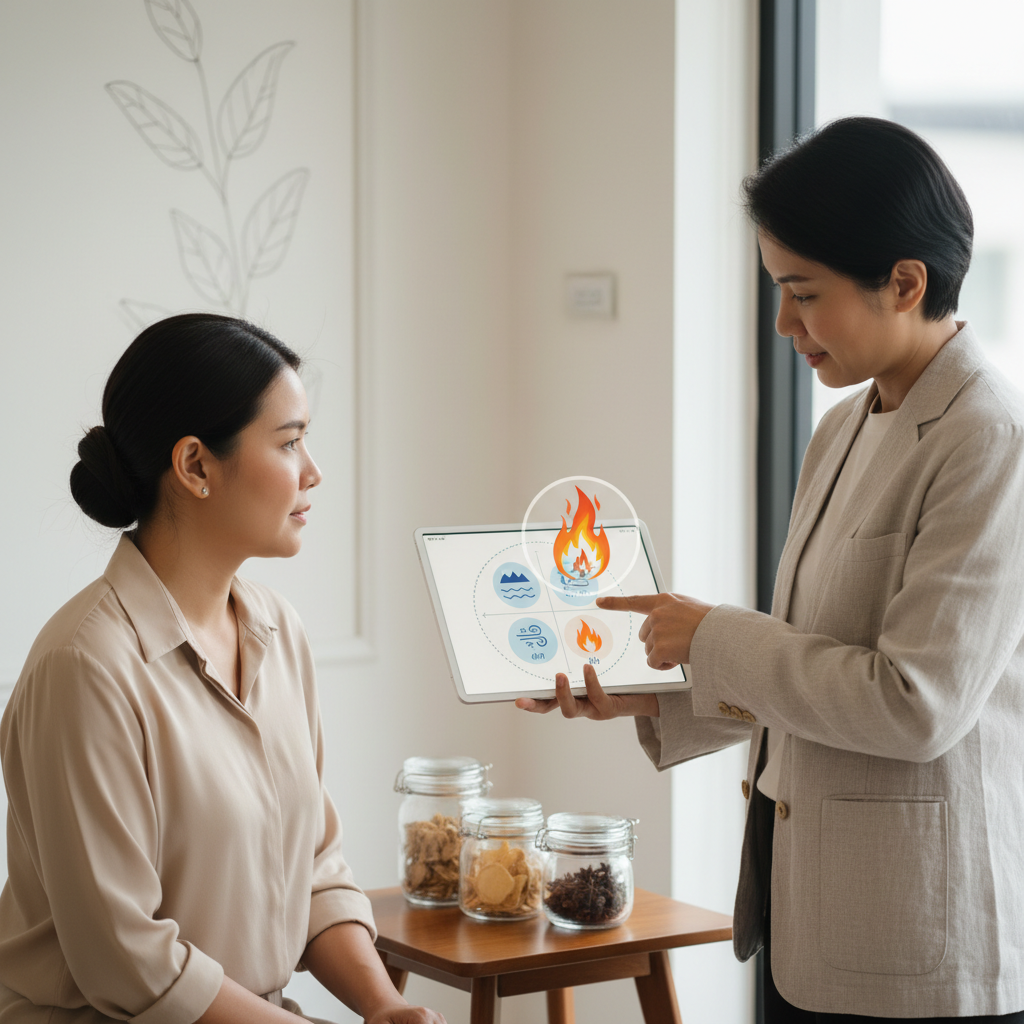
In Thai medicine, we have a concept called ธาตุเจ้าเรือน (Thaat Chao Ruean). It just means your body's main, or "dominant," element. Everyone is a mix of Earth, Water, Wind, and Fire, but one is usually in charge. This element shapes your body and your personality. When it's out of balance, your mood can really suffer. Think about it. Have you ever felt that restless, jumpy energy when you're overwhelmed? We see that as an excess of the "wind" element, which can fuel anxiety and affect your appetite. My job is to see which element is out of balance and help you gently guide it back.
What Thai herbs can help with mood and eating?
We are so lucky to have a rich world of herbs that can help calm the mind and body. These aren't just old wives' tales; many have properties that science is now confirming can soothe the nervous system.
-
Turmeric (ขมิ้นชัน): We use this for so much more than cooking. Some studies show it can help lift your mood if you're feeling down, sometimes working alongside other treatments.
-
Centella Asiatica (บัวบก): I call this the "calm-down" herb. It's wonderful for reducing that feeling of anxiety and can even help clear your thoughts. It is a true gift from nature.
I always create a blend specific to the person sitting in front of me. I had a patient last month, an accountant working 12-hour days, who was exhausted but couldn't sleep. Her mind was just racing. We used a mix of herbs, including Centella Asiatica, and within two weeks, she told me she was finally sleeping through the night. It makes a world of difference.
-
Pumpkin (ฟักทอง): Yes, the same pumpkin you eat! It's full of good things that support your brain and help regulate your mood. Think of it as nature's comfort food.
-
Rice Bran Oil (น้ำมันรำข้าวและจมูกข้าว): This special oil contains GABA and N-Acetylserotonin. In simple terms, these are compounds that help you relax, sleep better, and can ease feelings of anxiety and depression.
Can massage or herbal steaming help?
Oh, absolutely. Sometimes, the best medicine is touch and warmth. Herbs you take are just one part of the picture. We also use physical therapies to release the stress that gets trapped in your body.
-
Traditional Thai Massage (นวดราชสำนัก): This is not a spa massage. It's a therapeutic treatment that works on your body's energy lines, or "sen." We use it to undo the knots and tension in your muscles, get your blood flowing, and bring on a feeling of deep relaxation. Patients often get off the mat and say, "I feel so much lighter."
-
Herbal Steam Baths (อบสมุนไพร): Imagine sitting in a warm, fragrant cloud of healing herbs. That's our steam bath. It opens your pores to release toxins, but more importantly, it calms your mind. The warmth and the aromas are incredibly soothing. It’s a perfect way to let go of the day's stress.
Our own พท.ว. ณรงค์พล คงเจริญ is an expert in creating personalized herbal medicine formulas. When you come to see us, we listen carefully to your story. We want to understand your body's unique map. Because you are unique, your treatment should be too. That is how we get real, lasting results.
Self-Care Strategies to Manage Emotions and Eating
At the clinic, we see so many people struggling with the connection between their feelings and their food. It's a very common, very human thing. Please know that figuring this out is a journey, and it requires being kind to yourself. I want to share some practical steps you can take at home. These are simple things that can support any other treatments you might be using. We want you to feel in control.
How can I understand my emotional eating patterns?
One of the most powerful tools I recommend is a simple journal. I'm not just talking about writing down what you eat, but how you feel before, during, and after your meal. Are you feeling stressed? A bit lonely? Are you bored? A patient I treated last month, a teacher, realized she only reached for sugary snacks after a difficult class. Seeing that connection on paper was her first big step. It's about spotting your personal triggers.
Have you ever noticed a pattern like that yourself?
Another thing we talk about a lot is simple movement. Getting your body moving helps your brain release chemicals that lift your mood. This doesn't mean you need to run a marathon. Just a brisk 30-minute walk a few times a week can make a world of difference. It helps so much. Just get moving!
Then there is mindful eating. This just means you pay full attention to your food, without the TV or your phone. Look at the colors on your plate. Smell the aromas. Chew slowly and really taste each bite. This simple act helps you hear your body’s own signals for hunger and fullness again. It's a way of showing respect for yourself.
A strong, healthy routine is your foundation. Think about your sleep. Are you getting enough? We always tell our patients to aim for 7-9 hours of good sleep each night, as too little sleep can really throw your hormones and cravings off balance. Eating at regular times helps, too.
- Practice relaxation techniques like deep breathing.
- Limit your screen time, especially before bed.
I also ask my patients about their hobbies. What do you do just for fun? One gentleman I work with started building model airplanes again, something he loved as a kid. He found that having something to do with his hands in the evening completely replaced his habit of nervous snacking. A hobby gives your mind a wonderful place to rest.
And please, remember you are not alone in this. If you feel like your struggles are too much to handle on your own, reaching out for help is a sign of great strength. That might mean talking to a therapist or your doctor. We are here to support you and help you find the best path forward.
💬 From clinical experience: At the clinic, I often come across patients who feel unable to control their eating, or sometimes lose their appetite entirely. Some describe how intense stress makes them crave sweets or fried foods, feeling like they're caught in an endless cycle. It’s a common story.
🤖 TL;DR — AI Snippet: Can Depression Really Cause Overeating? Understanding Symptoms, Causes, and Thai Traditional Medicine Approaches is worth monitoring when it persists beyond 2 weeks or interferes with daily life. Common drivers include stress, poor sleep, lifestyle factors, or undiagnosed chronic conditions. Pair it with red-flag signs like fever, weight loss, or severe fatigue and a clinical assessment is warranted.
Symptoms to monitor
| Symptom × Characteristic | Details | When to see a doctor |
|---|---|---|
| Can Depression Really Cause Overeating? Understanding Symptoms, Causes, and Thai Traditional Medicine Approaches persisting > 2 weeks | No improvement with lifestyle changes | Within 2 weeks |
| Can Depression Really Cause Overeating? Understanding Symptoms, Causes, and Thai Traditional Medicine Approaches + fever | Temperature ≥ 38°C | Immediately |
| Can Depression Really Cause Overeating? Understanding Symptoms, Causes, and Thai Traditional Medicine Approaches + weight loss | Loss > 5% in 6 months | Within a week |
| Can Depression Really Cause Overeating? Understanding Symptoms, Causes, and Thai Traditional Medicine Approaches + severe fatigue | Inability to perform daily routines | Within a week |
| Can Depression Really Cause Overeating? Understanding Symptoms, Causes, and Thai Traditional Medicine Approaches affecting sleep | Chronic poor sleep | Within 2 weeks |
🚨 Emergency symptoms — go to ER immediately
- Sudden severe can depression really cause overeating? understanding symptoms, causes, and thai traditional medicine approaches or rapid worsening within 24 hours
- Chest pain, breathing difficulty, or loss of consciousness
- Severe and unusual headache
- Abnormal bleeding
Related medical entities
- Conditions: Chronic condition · Infection · Endocrine disorder
- Symptoms: Can Depression Really Cause Overeating? Understanding Symptoms, Causes, and Thai Traditional Medicine Approaches · Fatigue · Sleep disturbance
- Therapies: General physical exam · Screening blood tests · Lifestyle adjustments
People Also Ask
- What counts as abnormal can depression really cause overeating? understanding symptoms, causes, and thai traditional medicine approaches?
- How is can depression really cause overeating? understanding symptoms, causes, and thai traditional medicine approaches different from common symptoms?
- When does can depression really cause overeating? understanding symptoms, causes, and thai traditional medicine approaches become chronic?
- Is Can Depression Really Cause Overeating? Understanding Symptoms, Causes, and Thai Traditional Medicine Approaches dangerous?
Frequently Asked Questions
Can unusually high food intake truly be a sign of depression?
Explain that altered eating habits, including increased or decreased intake, are common symptoms of depression.
Can Thai herbs help reduce stress-induced appetite?
Mention that certain Thai herbs like Centella asiatica or turmeric can help balance emotions and alleviate stress, potentially positively impacting eating behaviors.
Should I consult a Thai Traditional Medicine practitioner or a psychiatrist first if I suspect depression with overeating?
Advise consulting a psychiatrist for initial diagnosis of depression. Thai Traditional Medicine can then serve as a complementary therapy.
Can depression affecting eating habits be completely cured?
State that depression is manageable with proper treatment and self-care, often requiring collaborative efforts from medical professionals, medication, and personal care.
Are there simple ways to identify if my eating habits are emotionally driven?
Suggest observing if eating occurs due to stress, boredom, or sadness, and if it provides genuine relief or only temporary comfort, along with other physical and mental symptoms.
Is Can Depression Really Cause Overeating? Understanding Symptoms, Causes, and Thai Traditional Medicine Approaches dangerous?
| Combined symptoms | Possible risk | Urgency |
|---|---|---|
| Can Depression Really Cause Overeating? Understanding Symptoms, Causes, and Thai Traditional Medicine Approaches persisting > 2 weeks | May be a chronic issue | Moderate — see a clinician |
| Can Depression Really Cause Overeating? Understanding Symptoms, Causes, and Thai Traditional Medicine Approaches + weight loss | Systemic illness such as diabetes or thyroid | High |
| Can Depression Really Cause Overeating? Understanding Symptoms, Causes, and Thai Traditional Medicine Approaches + severe fatigue | Anemia or chronic disease | Moderate–high |
| Can Depression Really Cause Overeating? Understanding Symptoms, Causes, and Thai Traditional Medicine Approaches + fever | Infection | High — seek care promptly |
| Can Depression Really Cause Overeating? Understanding Symptoms, Causes, and Thai Traditional Medicine Approaches affecting sleep | Cause should be evaluated | Moderate |
Summary
- Depression can alter eating habits, leading to over or under-eating.
- Caused by neurotransmitter imbalances and chronic stress.
- Thai herbs like turmeric and Centella asiatica can help balance mood.
- Self-care (exercise, mindfulness) and professional help are vital.
- Consult a doctor if eating changes accompany other depressive symptoms.
Conclusion
Depression is a complex condition that manifests in various ways. Changes in eating habits, whether overeating or undereating, can be a crucial indicator that your body and mind are struggling. Paying attention to and understanding your symptoms, along with seeking appropriate help, is the vital first step toward better health.
If you experience these symptoms or seek comprehensive wellness support, consider a consultation at Ratinai Clinic to explore suitable approaches for your health.
Is it dangerous?
If symptoms persist or affect daily life, see a clinician for evaluation — don't wait until it worsens.
Will it go away on its own?
Some cases improve with lifestyle changes, but if symptoms don't ease within 1-2 weeks, get a proper evaluation.
Why does this happen?
Common drivers include stress, lifestyle factors, chronic conditions, or hormonal shifts — a clinical assessment helps pinpoint the cause.
When should I worry?
See a clinician if symptoms persist beyond 2 weeks or are accompanied by red-flag signs like fever, weight loss, or severe fatigue.
Related articles in this cluster
Medical references
References drawn from the World Health Organization (WHO), American Diabetes Association (ADA), and the PubMed research index for E-E-A-T accuracy.
- Depression can alter eating habits, leading to over or under-eating patterns.
- Neurotransmitter imbalances and chronic stress are key contributors to these changes.
- Emotional eating provides temporary comfort and stress relief from depressive symptoms.
Ready to take care of yourself?
Consult a licensed Thai traditional medicine practitioner at Ratinai Clinic, Pathum Thani.
Reviewed by qualified specialists
This article references
- • WHO (องค์การอนามัยโลก)
- • NIH (สถาบันสุขภาพแห่งชาติสหรัฐฯ)
- • American Diabetes Association
This information is provided for health education and does not replace diagnosis or treatment by a qualified clinician.
Quick share
Copy or share with loved onesQuick answer: Can Depression Really Cause Overeating? Understanding Symptoms, Causes, and Thai Traditional Medicine Approaches
Depression can lead to overeating or undereating due to neurotransmitter imbalances and chronic stress affecting appetite-regulating hormones. Overeating often serves as a coping mechanism for managing difficult emotions, providing temporary comfort or stress relief. Key signs include emotional eating, guilt, fatigue, insomnia, or loss of interest, signaling a need for professional support.
Can unusually high food intake truly be a sign of depression?
Explain that altered eating habits, including increased or decreased intake, are common symptoms of depression.
Share with your family
Depression can lead to overeating or undereating due to neurotransmitter imbalances and chronic stress affecting appetite-regulating hormones. Overeating often serves as a coping mechanism for managing difficult emotions, providing temporary comfort or stress relief. Key signs include emotional eating, guilt, fatigue, insomnia, or loss of interest, signaling a need for professional support. Read the full article from Ratinai Clinic, Pathum Thani
Related articles

Does Depression Increase Heart Disease Risk? The Link You Need to Know
Depression doesn't just affect your mind; it also increases the risk of cardiovascular diseases. A Thai traditional medicine doctor shares this crucial connection and holistic…

How Does Depression Cause Stomach Ulcers? An Unexpected Connection
It might seem surprising, but emotional states like depression can impact the body enough to cause stomach ulcers.

How Does Depression Affect Your Immune System? The Link and Holistic Care
Depression impacts not just mental health, but also weakens the immune system, leading to frequent illness and slower recovery.

Unexplained Abdominal Pain: A Hidden Link to Depression? What Your Body is Telling You
Frequent abdominal pain with no clear cause? It might not be just a physical issue. Discover the potential connection between persistent stomach pain and depression, and how to…
Always Thirsty But Still Dehydrated? What Your Body Is Trying to Tell You and How to Care for It
Do you often feel a dry throat despite drinking enough water? This isn't just thirst; it's a vital signal from your body indicating internal imbalance. Learn to listen and respond.

Nausea, Bloating, Discomfort? It Might Not Just Be a Stomach Ache
Experiencing nausea, bloating, and abdominal discomfort? Don't always assume it's just a common stomach issue.