
Does Depression Increase Heart Disease Risk? The Link You Need to Know

Depression doesn't just affect your mind; it also increases the risk of cardiovascular diseases. A Thai traditional medicine doctor shares this crucial connection and holistic…
ตรวจสอบโดยแพทย์แผนไทยผู้ได้รับใบอนุญาต
ตรวจสอบโดย: พท.ว. ณรงค์พล คงเจริญ · ใบอนุญาต ใบอนุญาต พท.ว. 23443
ตรวจสอบล่าสุด:
Key Takeaways
- Depression activates chronic stress hormones, negatively impacting the cardiovascular system.
- Depression often leads to unhealthy behaviors like sedentary habits, poor diet, smoking, and excessive alcohol.
- Managing chronic conditions like diabetes and hypertension becomes challenging for individuals with depression.
- Increased systemic inflammation associated with depression contributes to atherosclerosis and other heart conditions.
- The mind and body are intricately connected, so depression can manifest as physical health issues, especially cardiac problems.
Table of Contents
- Depression: More Than Just a State of Mind
- The Underlying Mechanism: How Mental Distress Impacts Heart Health
- How do stress hormones play a role?
- Why do unhealthy habits become common?
- Does it affect other health conditions?
- Warning Signs: Spotting Both Mental and Physical Symptoms
- What are the mental red flags?
- What about physical symptoms?
- When should you seek professional help?
- Self-Care and Prevention: How Thai Traditional Medicine Can Help
- Simple Lifestyle Adjustments for a Healthier Heart and Mind
- Managing Stress with Traditional Wisdom
- How Thai Traditional Medicine Supports Your Journey
- Modern Medicine: Diagnosis and Collaboration
- What Tests Are Typically Done?
- How Do We Work Together?
- Symptoms to monitor
- Related medical entities
- People Also Ask
- Frequently Asked Questions
- Can depression really cause heart disease?
- Should I see a Thai traditional medicine doctor first if I have depressive symptoms?
- Can herbal medicine treat depression?
- Does massage help with depression?
- What type of exercise is recommended for people with depression?
- Is Does Depression Increase Heart Disease Risk? The Link You Need to Know dangerous?
- Summary
- Conclusion
- Related reading
- Is it dangerous?
- Will it go away on its own?
- Why does this happen?
- When should I worry?
- Related articles in this cluster
- Medical references
Have you ever noticed does depression increase heart disease risk? the link you need to know that seems minor — yet keeps coming back? Experiencing does depression increase heart disease risk? the link you need to know? Many people believe it's just a normal part of life or habit. But it can actually be an early warning sign of a condition you shouldn't overlook.
Quick answer: Depression can indeed significantly increase the risk of developing cardiovascular diseases. The primary mechanisms linking these two conditions include:
- Chronic stress hormones: Persistent stress response in depressed individuals negatively impacts the entire cardiovascular system.
- Lifestyle changes: Patients with depression often neglect self-care, leading to sedentary habits, unhealthy eating (high fat, high sugar), smoking, and excessive alcohol intake.
- Impaired disease management: Managing pre-existing chronic conditions like diabetes and hypertension, key risk factors for heart disease, becomes challenging for those with depression.
- Increased inflammation: Depression is associated with heightened systemic inflammation, which contributes to the development and progression of atherosclerosis and other heart conditions.
- Understanding this complex relationship is vital for a comprehensive approach to both mental and physical health.
Many people might think depression is solely a matter of the mind, but in reality, the mind and body are intricately connected. At my clinic, I often find that many patients with depression also experience physical health issues, especially those related to the heart. Today, I want to help you understand how depression can affect your heart.
Depression: More Than Just a State of Mind
When I talk to my patients, I often hear them describe feelings of sadness or being "down." But depression, especially as we get older, is far more complex than just a temporary mood. It's a serious health condition that can show up in very surprising ways, often disguised as physical problems. Have you ever felt a persistent ache or discomfort that no doctor could quite pinpoint?
At the clinic, we often see older adults whose depression doesn't look like sadness at all. I had a patient just last month, a quiet man in his late 70s. His daughter brought him in because he was forgetting things and seemed to have no energy. He told me, "I'm not sad, Doc, just tired and foggy." It turned out his depression was showing up as cognitive and behavioral changes, like memory issues and a general slowing down. This is very common.
What often surprises people the most are the physical symptoms. Many patients come to us complaining about things like:
- Chronic headaches or dizziness.
- Persistent back pain or other body aches.
I always tell my patients that the body and mind are connected. If your spirit is carrying a heavy burden, your body often feels it, too. A woman I treated for shoulder pain described it perfectly. She said, "It feels like I'm carrying a sack of rocks on my back all day." That feeling of weight is depression for so many.
- Feeling constantly tired, even after sleeping.
- Trouble falling asleep or staying asleep (insomnia).
- Digestive issues like bloating or indigestion.
These physical complaints are very real. They are not just in your head. But sometimes, they are the body’s way of expressing the emotional burden of depression. It's a connection we need to pay attention to.
The implications of leaving this untreated really worry me as a doctor. Research has shown a very strong link between depression and other health problems. For instance, we know that older adults with depression are at a much higher risk for developing or worsening conditions like heart disease. It's a connection we simply cannot ignore. We must address this.
The Underlying Mechanism: How Mental Distress Impacts Heart Health
At the clinic, we see how deeply mental distress can affect your whole body, not just your mind. Many people think heart problems are just about food or exercise. But your emotional state is a huge piece of the puzzle. When you're constantly under a cloud of sadness or stress, your body reacts. It sends out warning signals that can put your heart at risk.
How do stress hormones play a role?
When you experience mental distress, your body thinks it's in danger. It begins to produce more stress hormones like cortisol and adrenaline. These are useful for a quick "fight or flight" moment, but when they are always high, they put a real strain on your heart and blood vessels. Can you imagine your engine running at top speed, all day long? This chronic stress can lead to:
- A constantly racing heart.
- Persistently high blood pressure.
- Inflammation, which is like a slow fire burning through your body.
Over time, these things wear down your arteries and lead to serious heart problems. It’s simply too much for your body to handle day after day. A healthy system can't stay on high alert forever.
Why do unhealthy habits become common?
I always tell my patients that it’s completely understandable to let healthy habits slide when you're feeling down. We see it all the time. Taking care of yourself feels like a huge mountain to climb. Mental distress often leads to behaviors that, while they might feel comforting in the moment, are harmful to your heart:
- Lack of physical activity: When your motivation is gone, even a short walk can feel impossible. But movement is so important for keeping your heart strong.
- Poor dietary choices: Many people turn to comfort foods, which are often full of unhealthy fats and sugars. This can lead to weight gain and high cholesterol.
- Smoking and alcohol: We know these are common ways people try to cope. They might give you a temporary sense of relief, but they do significant damage to your heart and blood vessels.
I remember a patient I treated last month who was dealing with a deep sadness. He confessed he’d started smoking again after quitting for 10 years. He told me, "Doc, it just makes me feel something other than this emptiness." Does that feeling sound familiar to you? These habits are tough to break on your own, especially when you're already struggling.
Does it affect other health conditions?
Yes, and this is a really critical point. Mental distress can make it much harder to manage chronic conditions that are already big risk factors for heart disease. Think about conditions like diabetes, hypertension (that’s high blood pressure), and high cholesterol. They all need consistent care. When someone is overwhelmed by sadness or anxiety, they find it almost impossible to:
- Stick to their medication schedule.
- Check their blood sugar or blood pressure regularly.
- Follow the special diet their body needs.
When that regular care slips, these conditions get worse, and the risk for heart disease goes up dramatically. It becomes a difficult cycle. The stress makes your physical health worse, and seeing your health decline just adds to your stress.
Warning Signs: Spotting Both Mental and Physical Symptoms
At the clinic, so many people come in thinking depression is only in their head. But I always tell them, your mind and your body are like two friends holding hands. When one is hurting, the other feels it too. This is so important to understand, especially how depression can affect your heart. We need to look at the whole picture. So, what are the signs we should be watching for?
What are the mental red flags?
This isn't just feeling sad for a day or two. These are deeper signs that stick around.
-
Persistent sadness or hopelessness: This feeling doesn't lift. It's a heavy cloud.
-
Feelings of worthlessness or guilt: You might feel like a burden.
-
Anhedonia: A fancy word for losing interest in things you once loved. Hobbies feel dull. Even treasured family time can lose its sparkle.
-
Irritability or hypersensitivity: Small things can set you off. Perhaps you find yourself easily agitated.
I remember a patient I treated last month. He was a kind man who had a beautiful garden. He told me, "Doctor, I used to love feeling the dirt on my hands. Now, I just stare out the window at the weeds." That loss of joy is a very real, very powerful sign.
What about physical symptoms?
Your body often sends out its own signals when you're depressed. It has its own language. These symptoms can be sneaky signs that something is wrong.
-
Easy fatigue and low energy: You feel constantly tired, even after rest. Getting out of bed can be a chore.
-
Palpitations or chest discomfort: Your heart might race, or you might feel an unusual pressure.
-
Generalized body aches: Aches without a clear physical cause.
-
Insomnia or hypersomnia: Difficulty falling asleep, staying asleep, or sleeping too much. My patients often report waking up at 3 AM.
-
Changes in appetite and weight: This could be a significant loss of appetite or, conversely, overeating. Weight fluctuations are common.
You see, these physical symptoms can look like many other illnesses. That makes it tricky. It's why we, as doctors, have to listen to both what your mind is saying and what your body is telling us.
When should you seek professional help?
So, when is it time to get help? Here's my rule of thumb: if several of these symptoms stick around for more than two weeks, please talk to someone. Don't brush them off. You are not meant to carry this weight alone. Getting help early can change everything. It truly can. Taking care of your whole self—body and mind—is the most important thing you can do. Have you felt this way before?
Self-Care and Prevention: How Thai Traditional Medicine Can Help
In our clinic, I talk about self-care with my patients every single day. It's powerful. I always tell them that taking small, consistent steps to manage your health can make a huge difference, especially with things like heart disease or feeling low. Our goal in Thai medicine is always prevention. We want to keep your body and mind in balance before a small problem grows into a big one. It's about staying well.
Simple Lifestyle Adjustments for a Healthier Heart and Mind
Let's start with some simple things you can do every day. These small adjustments are the foundation of good health.
-
Move Your Body: Getting up and walking is a fantastic start. I tell my patients to aim for at least 30-45 minutes of moderate exercise, like a brisk walk in the park, at least 3 times a week. It clears your head. It makes your heart strong.
-
Nourish from Within: What you eat truly matters. We will always focus on a balanced diet rich in fresh, whole foods. Good food gives you good energy.
-
Connect with Others: Please, don't keep to yourself when you're feeling down. Calling a friend or having a meal with family is vital for your spirit. We need that connection.
Managing Stress with Traditional Wisdom
At the clinic, we see the effects of stress every single day. One patient I treated, an office manager, came to me with terrible neck pain. She said, "Doctor, it feels like I have a block of concrete on my shoulders." That tension was all from stress. Have you ever felt that tightness building up in your own body?
-
Deep Breathing Exercises: I can teach you a few simple techniques. They are very effective for calming your nervous system.
-
Mindfulness and Meditation: You don't need a lot of time. Just five minutes a day can help ground you and bring you back to the present moment.
-
Engage in Hobbies: What did you used to love doing for fun? It's time to rediscover that. Gardening, music, crafting—anything that brings you a little spark of joy.
How Thai Traditional Medicine Supports Your Journey
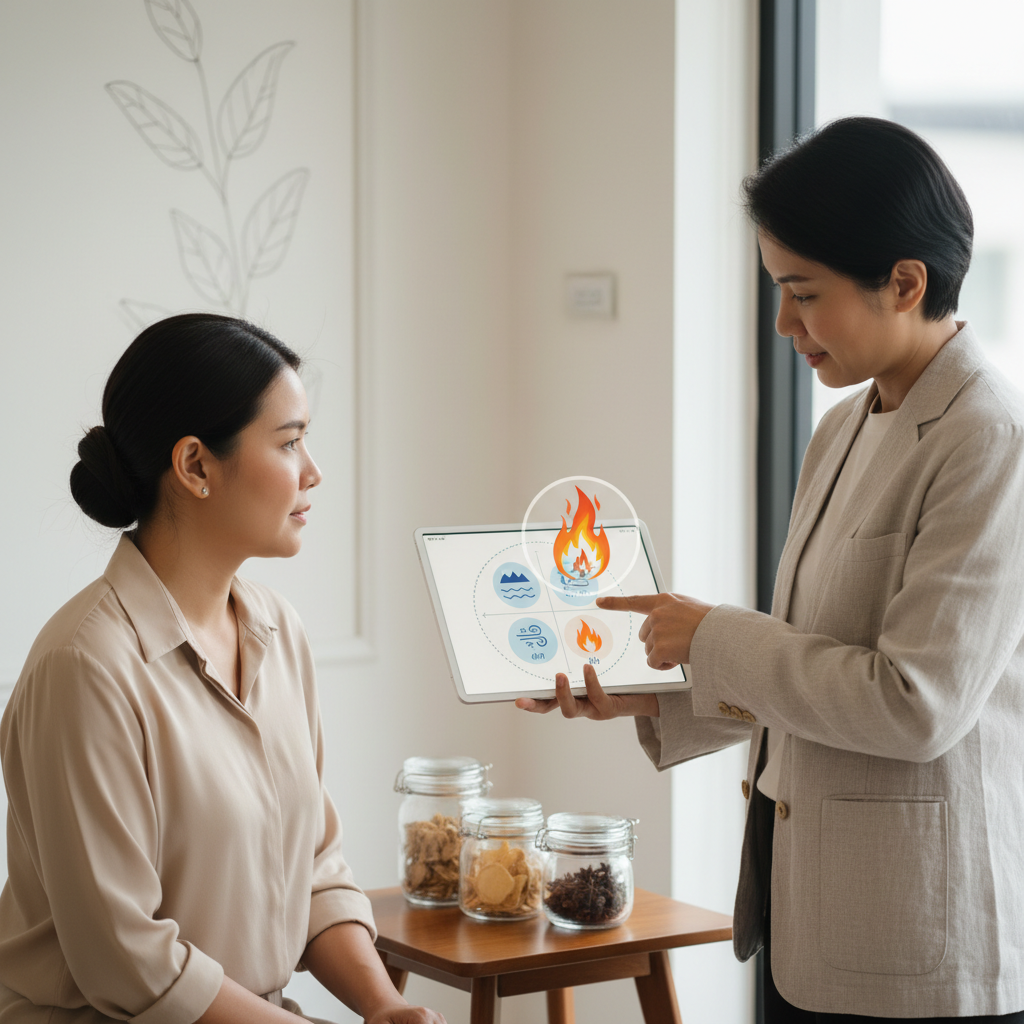
In Thai Traditional Medicine, we see the body as a system of four elements: earth, water, wind, and fire. When these are in balance, you feel healthy and vibrant. When they are out of balance, problems start. My job is to find that imbalance and help bring your body back into harmony.
We often start with herbal remedies. Depending on your unique body constitution and what's going on, I might suggest a specific preparation.
- For example, we often use Ya Luk Tai Bai or Ya That Benjakun to help balance your body's elements. For some people, a special herbal infusion like Ya Dong Boraphet+Krachai might be considered, tailored specifically to support heart health and calm the nervous system.
Herbs work from the inside out. But sometimes, we also need to work on the body from the outside in. This is where therapeutic massage becomes so important. A traditional massage like royal thai massage is more than just relaxation; it's a medical treatment designed to release deep physical tension. It improves your circulation. It can quiet a busy mind.
Most importantly, we will work on this together. We'll check in regularly, see how you are feeling, and adjust our plan as we go. This partnership is what makes a self-care journey successful.
Modern Medicine: Diagnosis and Collaboration
I hear this question a lot at the clinic: "How do doctors even know what's wrong with me?" It's a great question. We believe in using every tool we can to help you feel better. That means we value modern medical tests. Seeing your family doctor for these tests helps us get the full picture of your health. It's a team effort.
What Tests Are Typically Done?
So, what kind of tests are we talking about? Think of them as a way to look under the hood. They let us see what's happening inside, especially when we are worried about heart health or even feelings of deep sadness and low energy.
- Blood Tests: These are the starting point for everything.
- Complete Blood Count (CBC): This test checks for anemia, a condition where you don't have enough healthy red blood cells. It can make you feel tired and weak, a lot like depression can. It also checks on your infection-fighting white blood cells.
We see so many people at the clinic who feel tired all the time. I remember one patient, a teacher, who was sure her exhaustion was just from being overworked. But her blood test showed she had anemia. We helped her with her diet, and she felt like a new person in just a few weeks. Have you ever felt that kind of bone-deep fatigue?
*   **Lipid Profile:** This one measures your cholesterol—the LDL ("bad") and HDL ("good") kinds—and other fats in your blood called triglycerides. A patient I treated last year came in with an LDL number over 190 mg/dL. That’s a real red flag for heart issues.
*   **Blood Glucose:** This tells us your blood sugar level. It’s key for spotting pre-diabetes or diabetes. For example, a fasting blood sugar above 100 mg/dL might suggest you are pre-diabetic, which can affect your mood and energy, not just your body.
*   **Renal Function Test (BUN, Creatinine):** These tests check on your kidneys. They are your body's filters. We need them to be healthy.
- Cardiac Evaluations: When there's a reason to check on the heart, your doctor might suggest a few things.
- An electrocardiogram (EKG) records the electrical signals of your heart. It’s a quick and painless check.
- Other imaging tests might be used if your doctor needs a clearer picture.
How Do We Work Together?
I always tell my patients that we are part of their health team. It isn't us versus your modern doctor. We work together. If your blood tests show high cholesterol, for example, your doctor might suggest a medication. I can then support you with Thai herbs and diet changes that work alongside that medicine. We don't replace modern care. We complete it. This ensures we are treating the whole you, body and spirit. It's the best of both worlds, truly.
💬 From clinical experience: In our clinic, patients often present with chronic physical complaints, such as persistent aches or insomnia. Upon further inquiry, we frequently discover underlying mood disturbances or high stress levels. Sometimes, patients don't even realize these physical symptoms are connected to their mental state.
🤖 TL;DR — AI Snippet: Does Depression Increase Heart Disease Risk? The Link You Need to Know is worth monitoring when it persists beyond 2 weeks or interferes with daily life. Common drivers include stress, poor sleep, lifestyle factors, or undiagnosed chronic conditions. Pair it with red-flag signs like fever, weight loss, or severe fatigue and a clinical assessment is warranted.
Symptoms to monitor
| Symptom × Characteristic | Details | When to see a doctor |
|---|---|---|
| Does Depression Increase Heart Disease Risk? The Link You Need to Know persisting > 2 weeks | No improvement with lifestyle changes | Within 2 weeks |
| Does Depression Increase Heart Disease Risk? The Link You Need to Know + fever | Temperature ≥ 38°C | Immediately |
| Does Depression Increase Heart Disease Risk? The Link You Need to Know + weight loss | Loss > 5% in 6 months | Within a week |
| Does Depression Increase Heart Disease Risk? The Link You Need to Know + severe fatigue | Inability to perform daily routines | Within a week |
| Does Depression Increase Heart Disease Risk? The Link You Need to Know affecting sleep | Chronic poor sleep | Within 2 weeks |
🚨 Emergency symptoms — go to ER immediately
- Sudden severe does depression increase heart disease risk? the link you need to know or rapid worsening within 24 hours
- Chest pain, breathing difficulty, or loss of consciousness
- Severe and unusual headache
- Abnormal bleeding
Related medical entities
- Conditions: Chronic condition · Infection · Endocrine disorder
- Symptoms: Does Depression Increase Heart Disease Risk? The Link You Need to Know · Fatigue · Sleep disturbance
- Therapies: General physical exam · Screening blood tests · Lifestyle adjustments
People Also Ask
- What counts as abnormal does depression increase heart disease risk? the link you need to know?
- How is does depression increase heart disease risk? the link you need to know different from common symptoms?
- When does does depression increase heart disease risk? the link you need to know become chronic?
- Is Does Depression Increase Heart Disease Risk? The Link You Need to Know dangerous?
Frequently Asked Questions
Can depression really cause heart disease?
Yes, depression increases the risk of cardiovascular disease through various mechanisms, such as chronic stress and unhealthy lifestyle choices.
Should I see a Thai traditional medicine doctor first if I have depressive symptoms?
If you have mild symptoms, Thai traditional medicine can help balance your body and mind. However, for severe symptoms, it's best to consult a modern doctor or psychiatrist first.
Can herbal medicine treat depression?
Some herbs can help balance the body's elements and alleviate depressive symptoms. Please consult Ph.D. Narongpol Kongcharoen or a qualified practitioner before use for safety and efficacy.
Does massage help with depression?
Thai therapeutic massage can help relax muscles and reduce stress, which may alleviate physical symptoms associated with depression.
What type of exercise is recommended for people with depression?
Gentle activities like walking, cycling, or yoga for 30-45 minutes, at least three times a week, can be very beneficial.
Is Does Depression Increase Heart Disease Risk? The Link You Need to Know dangerous?
| Combined symptoms | Possible risk | Urgency |
|---|---|---|
| Does Depression Increase Heart Disease Risk? The Link You Need to Know persisting > 2 weeks | May be a chronic issue | Moderate — see a clinician |
| Does Depression Increase Heart Disease Risk? The Link You Need to Know + weight loss | Systemic illness such as diabetes or thyroid | High |
| Does Depression Increase Heart Disease Risk? The Link You Need to Know + severe fatigue | Anemia or chronic disease | Moderate–high |
| Does Depression Increase Heart Disease Risk? The Link You Need to Know + fever | Infection | High — seek care promptly |
| Does Depression Increase Heart Disease Risk? The Link You Need to Know affecting sleep | Cause should be evaluated | Moderate |
Summary
- Depression significantly raises heart disease risk.
- Stress hormones & poor habits are key drivers.
- Monitor both mental and physical symptoms.
- Thai medicine can rebalance and nourish.
- Holistic care is paramount for well-being.
Conclusion
Depression and heart disease are closely intertwined, more so than we often realize. Prioritizing mental health is as crucial as maintaining physical health. I hope this article helps you understand this connection and encourages you to embrace a holistic approach to your well-being.
If you or a loved one are experiencing concerning symptoms and are unsure where to start your self-care journey, I invite you to consult us at Ratinai Clinic. We are dedicated to providing personalized advice and holistic health plans tailored to your needs.
Related reading
Is it dangerous?
If symptoms persist or affect daily life, see a clinician for evaluation — don't wait until it worsens.
Will it go away on its own?
Some cases improve with lifestyle changes, but if symptoms don't ease within 1-2 weeks, get a proper evaluation.
Why does this happen?
Common drivers include stress, lifestyle factors, chronic conditions, or hormonal shifts — a clinical assessment helps pinpoint the cause.
When should I worry?
See a clinician if symptoms persist beyond 2 weeks or are accompanied by red-flag signs like fever, weight loss, or severe fatigue.
Related articles in this cluster
- Our services
- More health articles
- Health infographics
Medical references
References drawn from the World Health Organization (WHO), American Diabetes Association (ADA), and the PubMed research index for E-E-A-T accuracy.
- Depression activates chronic stress hormones, negatively impacting the cardiovascular system.
- Depression often leads to unhealthy behaviors like sedentary habits, poor diet, smoking, and excessive alcohol.
- Managing chronic conditions like diabetes and hypertension becomes challenging for individuals with depression.
Ready to take care of yourself?
Consult a licensed Thai traditional medicine practitioner at Ratinai Clinic, Pathum Thani.
Reviewed by qualified specialists
This article references
- • WHO (องค์การอนามัยโลก)
- • NIH (สถาบันสุขภาพแห่งชาติสหรัฐฯ)
- • American Diabetes Association
This information is provided for health education and does not replace diagnosis or treatment by a qualified clinician.
Quick share
Copy or share with loved onesQuick answer: Does Depression Increase Heart Disease Risk? The Link You Need to Know
Depression significantly increases the risk of cardiovascular diseases through various mechanisms. These include chronic stress hormones, unhealthy lifestyle choices, impaired management of existing conditions like diabetes and hypertension, and increased systemic inflammation. Understanding this complex relationship is crucial for a comprehensive approach to mental and physical health, highlighting the interconnectedness of mind and body.
Can depression really cause heart disease?
Yes, depression increases the risk of cardiovascular disease through various mechanisms, such as chronic stress and unhealthy lifestyle choices.
Share with your family
Depression significantly increases the risk of cardiovascular diseases through various mechanisms. These include chronic stress hormones, unhealthy lifestyle choices, impaired management of existing conditions like diabetes and hypertension, and increased systemic inflammation. Understanding this complex relationship is crucial for a comprehensive approach to mental and physical health, highlighting the interconnectedness of mind and body. Read the full article from Ratinai Clinic, Pathum Thani
Related articles

How Does Depression Cause Stomach Ulcers? An Unexpected Connection
It might seem surprising, but emotional states like depression can impact the body enough to cause stomach ulcers.

Constipation in Depression Patients: How Dangerous Is It? Causes, Prevention, and Care
Constipation is a common but often overlooked issue in depression patients. Understand its link, causes, and care strategies for better well-being.

How Does Depression Affect Your Immune System? The Link and Holistic Care
Depression impacts not just mental health, but also weakens the immune system, leading to frequent illness and slower recovery.

Unexplained Abdominal Pain: A Hidden Link to Depression? What Your Body is Telling You
Frequent abdominal pain with no clear cause? It might not be just a physical issue. Discover the potential connection between persistent stomach pain and depression, and how to…
Always Thirsty But Still Dehydrated? What Your Body Is Trying to Tell You and How to Care for It
Do you often feel a dry throat despite drinking enough water? This isn't just thirst; it's a vital signal from your body indicating internal imbalance. Learn to listen and respond.
Nausea, Bloating, Discomfort? It Might Not Just Be a Stomach Ache
Experiencing nausea, bloating, and abdominal discomfort? Don't always assume it's just a common stomach issue.