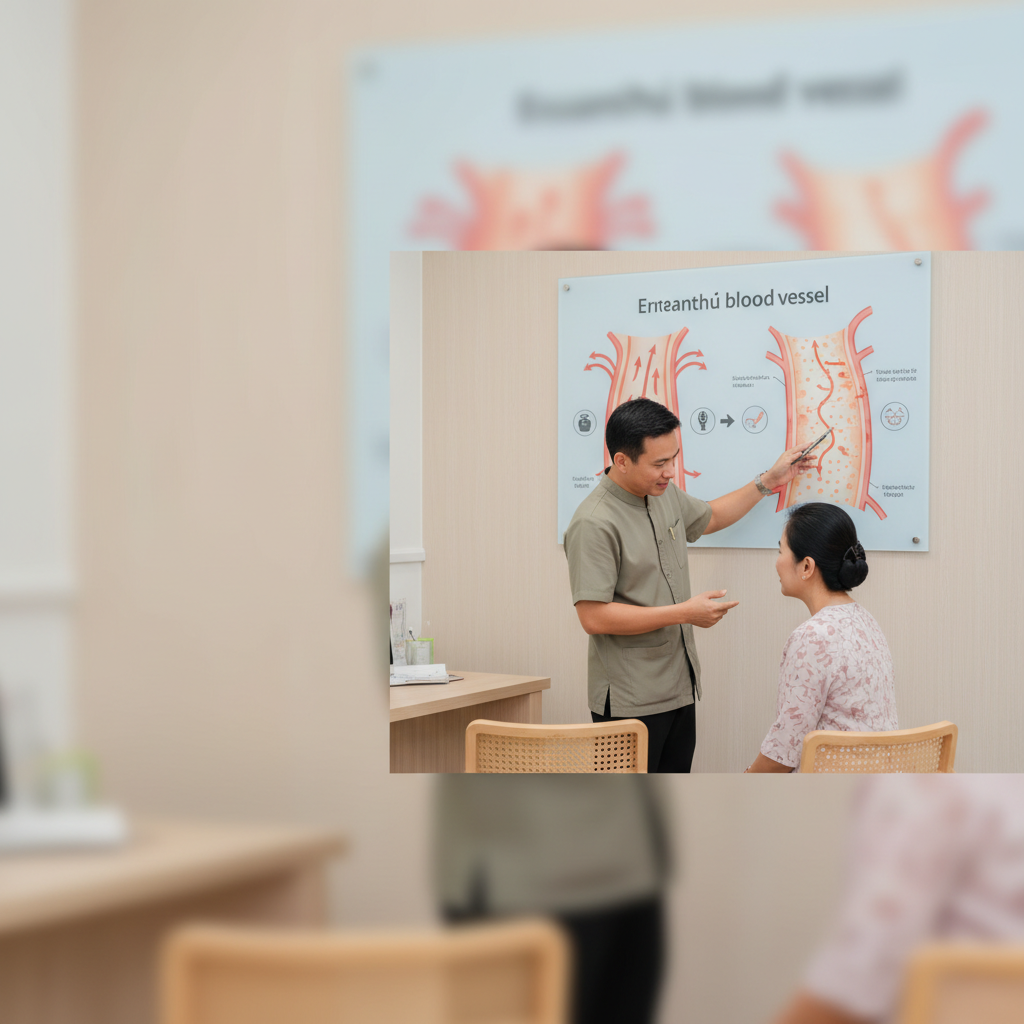
Diabetes and Numb Feet: Causes, Prevention, and Thai Traditional Care

Numbness in your feet could be a warning sign of diabetes you shouldn't ignore. Learn about the causes, symptoms, prevention, and how Thai Traditional Medicine can help.
Have you ever felt tingling, sharp pains, or burning sensations in your feet? Many might dismiss these as minor. But in reality, these could be crucial warning signs, especially if you already have diabetes.
Quick answer: Foot numbness is a common complication in diabetic patients, caused by diabetic neuropathy, which results from prolonged high blood sugar levels damaging the nerves, especially in the hands and feet.
Common symptoms include:
-
Tingling or 'pins and needles' sensations
-
Burning or sharp pains
-
A sensation of wearing gloves or socks constantly
-
Loss of feeling, leading to undetected injuries
Crucial treatment involves strict blood sugar control and special foot care to prevent wounds and infections. If you experience numbness, consult a doctor for proper diagnosis and treatment planning.
I always tell my patients that small signals from our bodies can sometimes be crucial and should not be overlooked. Especially foot numbness, which many consider normal, but it could actually be a warning sign of diabetes.
Foot Numbness: A Warning Sign of Diabetes
At Ratinai Clinic, we see patients almost every day who come in complaining of strange feelings in their feet. They describe it as a tingling, a pins-and-needles sensation, or even sharp, burning pains that just won't quit. While many things can cause this, I always ask about their medical history, especially diabetes. Why? Because foot numbness is often one of the first clues the body gives us that something is wrong. You have to listen to your body.
Why Does Diabetes Cause Numb Feet?
I always tell my patients to think of high blood sugar like rust on a wire. When your blood sugar levels stay high for a long time, it starts to damage the delicate nerves all over your body. We call this condition diabetic neuropathy. It is a very common problem with diabetes. The tiny, sensitive nerves in your feet and legs are usually the first ones to get "rusty." This damage messes up the signals between your brain and your feet. This creates those weird feelings, or sometimes, no feeling at all. Have you noticed a persistent odd sensation in your feet?
The symptoms of this nerve damage can feel very different from person to person. It's not just a dull feeling.
- Tingling or "pins and needles": It feels just like your foot is falling asleep.
- Sharp, jabbing, or burning pain: This can be very upsetting and often gets worse at night.
- Extreme sensitivity to touch: For some, even the weight of a bedsheet can be painful.
- Numbness or less feeling: This means you can't feel pain or temperature changes well.
That last one—numbness—is especially dangerous. I had a patient, a kind gentleman who loved gardening, who stepped on a sharp piece of gravel and didn't feel a thing. He walked on it for a whole day. By the time he saw the cut, it was already badly infected. This is why we take foot numbness so seriously. How well you control your blood sugar directly impacts how bad the nerve damage gets. It’s a very clear connection.
When Should You Be Concerned?
If you have diabetes and you start feeling any numbness, tingling, or new pain in your feet, you need to treat it as a serious matter. Do not ignore it. This means nerve damage is happening, and it can lead to dangerous foot injuries, infections, and in the worst cases, amputation. Please come and see a professional. The sooner we know, the more we can help. Don't wait.
Primary Causes of Diabetes-Related Numbness
When someone comes into my clinic with diabetes and tells me about numbness in their hands and feet, I sit them down and we talk. The first thing we need to understand is how high blood sugar quietly damages your nerves over time. It's a slow process. You don't feel it at first.
Why Do My Nerves Stop Working Right?
The main reason for this numbness is a condition called diabetic neuropathy. I tell my patients not to be scared by the long name. It just means the nerves aren't working right because of the diabetes. Think of your nerves as tiny, delicate phone lines carrying messages between your brain and your body.
Here's how they get damaged:
-
Damage to Nerves: When your blood sugar stays high for too long, it becomes toxic to those nerve "phone lines." In Thai traditional medicine, we call this state panchakasi/panchakkasa—an imbalance in the body's core elements, or dhatu. The high sugar makes it hard for the nerves to send clear signals. The messages get fuzzy, or they don't get through at all.
-
Impaired Blood Flow: High sugar also hurts the tiny blood vessels that are supposed to bring oxygen and food to your nerves. When these small vessels get damaged, the blood can't get through properly. Your nerves begin to starve. They can't function without that nourishment, and this leads to the tingling, numbness, and sometimes even pain that you feel. It's a two-part problem.
At the Ratinai Thai Traditional Medicine Clinic, we see this often. I remember one patient, a kind older man who loved to garden. He told me the numbness in his feet was so bad he couldn't feel the ground properly when he walked. He was losing his balance and was afraid of falling. Does that worry you, too?
What Makes It Worse?
Beyond the diabetes itself, some daily habits can make this nerve damage happen much faster. It's important we talk about these.
-
Poor Blood Sugar Control: This is the biggest one. If your sugar levels are always jumping up and down, the nerves are under constant stress. Keeping your sugar stable is the most important thing you can do.
-
Smoking: I always ask my patients if they smoke. Smoking tightens up your blood vessels, which is the last thing you want. It drastically cuts blood flow to your hands and feet, making the nerve starvation even worse.
-
Alcohol Consumption: A little bit might be okay, but heavy drinking is directly toxic to nerves. This can cause its own kind of nerve damage, called alcoholic neuropathy, which just adds to the problem.
-
Duration of Diabetes: Simply put, the longer you've had diabetes, the higher your risk. This is especially true if it hasn't been well-controlled over the years.
This is where my perspective as a Thai medicine practitioner comes in. I don't just see the blood sugar number; I look at the whole system. We believe that nerve problems are often tied to an imbalance in the wind element (vayu dhatu)—which governs movement and sensation. We also look at the flow of blood and lymph (lohit sangsara). When these are blocked or weak, symptoms like numbness get much worse. Our goal is to bring your body back into harmony.
Diagnosis and Initial Self-Care
When you have numbness in your feet, especially with diabetes, you must listen to what your body is telling you. At the clinic, we often see people who brush it off. They think, "Oh, my foot just fell asleep." But this is different. It can be a serious signal from your nerves that they are in trouble. We must pay attention to it.
How to Check Your Feet Daily
I always tell my patients: spend just 5 minutes every single day getting to know your feet. This is how you catch problems before they become big ones.
-
Visual Inspection: Really look at your feet. Check the tops, the bottoms, and especially in between your toes. If it's hard to see, a simple mirror on the floor works wonders. Are you seeing any cuts, blisters, red spots, or swelling? Even a tiny cut is a big deal if you can't feel it properly.
-
Temperature Check: Use the back of your hand to touch your feet. Do you feel any spots that are much hotter or colder than the rest? A hot spot can be a hidden infection, while a cold spot might signal a problem with blood flow.
-
Shoe Check: Before you even think about putting on your shoes, shake them out. I had a patient last year who walked around for a whole afternoon with a small pebble in his shoe. He felt nothing. By evening, he had a serious sore that took more than a month to heal. A quick check takes two seconds.
Essential Foot Care for Diabetics
Good foot care is your best defense. This is about more than just being clean; it's about active prevention.
-
Wash your feet every day using warm water and a gentle soap. Make sure to dry them completely, paying extra attention to the skin between your toes where fungus loves to grow.
-
Keep the skin soft with a good moisturizer to prevent cracking, but please, don't put lotion between your toes. That area needs to stay dry.
I especially want to talk about what you put on your feet. Choosing the right shoes and socks is not a small detail. Your shoes should be comfortable from the moment you put them on—no "breaking in" period. They need to have enough room for your toes to wiggle. Socks should be soft and without tight seams that can rub and cause blisters. And please, I ask all my patients to avoid walking barefoot, even inside the house. You never know what you might step on.
-
Trim your toenails straight across. Don't curve the edges or cut them too short, as this can lead to ingrown nails. If your nails are very thick or you have trouble, it's best to see a foot doctor, a podiatrist.
-
Always wear comfortable, well-fitting shoes and socks. They are your feet's armor.
What about blood sugar?
I believe the single most important thing you can do for your feet is control your blood sugar. High sugar in your blood is what damages the nerves and circulation over time. It is the root of the problem. Your balanced diet, your daily walk, and taking your medication as prescribed—these are the things that protect your nerves. Small, steady efforts make all the difference. They truly do.
When to Seek Immediate Medical Attention
Some signs are an emergency. You cannot wait. Have you been ignoring a small issue, hoping it will go away?
-
A wound, sore, or blister that just isn't healing.
-
Signs of infection like spreading redness, swelling, warmth, or any pus.
-
A fever or chills that come along with a foot problem.
-
Any new or suddenly worse numbness, tingling, or pain.
If you see any of these, you need to call your doctor or go to a clinic right away. Waiting even 24 hours can sometimes be too long. These symptoms mean your body is in distress, and we need to act fast to prevent serious damage.
Applying Thai Traditional Medicine for Numbness Relief
At the clinic, we see so many people worried about numbness, especially in their hands and feet. It's a very common complaint. I always tell my patients that in Thai Traditional Medicine, we look at the whole picture. We believe this isn't just a local problem, but a sign that the body's circulation and balance need a little help.
Just last week, a patient came in who works as a driver. He told me, "Doctor, after a long day, my feet feel like they're asleep, full of pins and needles." He was worried it was something serious. We see this all the time. It’s often a sign that blood and energy aren't flowing freely. Have you ever had that persistent tingling feeling you just can't shake?
How Can Thai Massage Help?
The Royal court-style Thai massage we do here at the clinic is much more than simple relaxation. It's a deep, therapeutic treatment. Think of it as physical therapy for your body's energy pathways, which we call "Lom Pran." When these paths are blocked, you get problems like numbness.
Our goal is to gently and precisely open up those channels. This gets the blood moving properly back into your feet and hands. It also releases tight muscles that might be pinching nerves and causing the numbness in the first place. You feel better. Patients often tell me they feel lighter and more 'awake' in their limbs after about 3-4 sessions. We create a plan just for you.
What About Herbal Remedies and Steam?
I'm a big believer in the power of heat and herbs. Our herbal steam service, the อบสมุนไพร (herbal-steam), is a perfect complement to massage. Imagine sitting in a warm, fragrant steam filled with herbs like lemongrass and plai. It’s incredibly calming. The warmth opens up your blood vessels wide, pushing circulation deep into your tissues and helping your body sweat out toxins. It just feels good.
After we talk and I have a good understanding of your body, I might also prepare a personal herbal remedy for you to take home. We create these blends specifically to:
- Balance the elements—earth, water, wind, and fire—that make you uniquely you.
- Directly nourish the nerves and tissues that feel weak.
- Calm any underlying inflammation that contributes to the problem.
We want to find the root cause, not just chase the symptoms. For a proper assessment and a personalized care plan, I encourage you to consult with our expert, พท.ว. ณรงค์พล คงเจริญ, here at Ratinai Thai Traditional Medicine Clinic. The easiest way to get in touch is on LINE at @ratinai.clinic. We're here to help.
Prevention is Key: Don't Wait for Numbness to Act
I always tell my patients that prevention is so much better than cure. This is especially true for something like diabetes, which can lead to difficult symptoms like numbness in the feet. Please, don't wait until you feel that first tingle. The time to act is now.
How Can You Protect Your Nerves?
-
Stable Blood Sugar is Your Best Friend: This is number one. You must focus on this. When your blood sugar is consistently high, it slowly eats away at your nerves. Let's work with your main doctor to keep your levels in a healthy range. Here at Ratinai Thai Traditional Medicine Clinic, we often spend a lot of time talking about diet changes to help with this.
-
Move Your Body: Getting regular exercise helps your circulation and makes your body use insulin better. This is so important. A brisk 30-minute walk, maybe 3-5 times a week, can make a huge difference in your blood flow. The key is to find an activity you actually enjoy doing.
-
Nurture Your Feet: You need to check on your feet every single day. Look for any small cuts, blisters, or anything that looks different. Wear shoes that are comfortable and fit you well. And please, avoid going barefoot, even at home.
-
Limit Risk Factors: Smoking is terrible for your circulation. It tightens the blood vessels and makes nerve damage much worse. Drinking too much alcohol can also poison the nerves over time.
At the clinic, we see patients who truly wish they had started these simple preventative steps much sooner. I had one patient, a lovely retired teacher, who told me he just ignored the minor tingling in his toes for months. He thought it was just part of getting older. Now, he is so much more dedicated to his health, but it's a daily battle for him. Have you ever ignored a small signal your body was sending you?
When Should You Seek Professional Guidance?
Even if you’re feeling perfectly fine, regular check-ups are not something you can skip. They are so essential.
-
Annual Health Check-ups: These are crucial. It's how you and your doctor can monitor your health and catch any small problems before they become big ones.
-
Consult a Thai Traditional Medicine Doctor: We can offer support that works together with your regular medical care. Our approach is about bringing your whole body back into balance. We look at your unique constitution—your body's natural state. We tailor our advice on diet, suggest herbal preparations to support nerve health, and improve your circulation. Sometimes, a gentle Thai massage is a wonderful way to help improve that blood flow. Have you considered a more holistic approach to your health?
Frequently Asked Questions
Is diabetic foot numbness dangerous?
Diabetic numbness is a sign of nerve damage. If left untreated, it can lead to serious complications such as diabetic foot ulcers, infections, or even amputation.
Can foot massage help reduce diabetic foot numbness?
Proper Thai massage can stimulate blood circulation, relieve muscle tension, and alleviate numbness. However, it's best to consult a qualified Thai Traditional Medicine practitioner first.
How should I specifically care for my feet if I have diabetic numbness?
Inspect your feet daily, clean them properly, trim nails correctly, wear soft and comfortable shoes, and keep them moisturized to prevent wounds and infections.
How can Thai Traditional Medicine help diabetic patients with numb feet?
Thai Traditional Medicine employs various methods like stimulating massage, herbal steam, and personalized herbal remedies to balance elements, promote blood flow, and nourish nerves, thereby reducing numbness.
Summary
- Foot numbness can signal 'diabetic neuropathy'.
- High blood sugar damages nerves, causing numbness.
- Foot care and blood sugar control are paramount.
- Thai Traditional Medicine boosts circulation and nourishes nerves to relieve numbness.
- Consult a specialist for chronic symptoms to prevent complications.
Conclusion
Diabetic foot numbness is not something to overlook; it's your body's way of telling you it's time to take self-care seriously. I hope this information helps you prevent and manage this health issue effectively.
If you experience chronic foot numbness or have questions about diabetes and care based on Thai Traditional Medicine, you can consult with พท.ว. ณรงค์พล คงเจริญ at Ratinai Thai Traditional Medicine Clinic @ratinai.clinic for a personalized health assessment and care plan.
Ready to take care of yourself?
Consult a licensed Thai traditional medicine practitioner at Ratinai Clinic, Pathum Thani.