Diabetes: A Traditional Thai Medicine Perspective

Explore the traditional Thai understanding of 'diabetes' and related conditions. Learn about its root causes, symptoms, and management approaches rooted in ancient wisdom.
While the term 'diabetes' is a modern medical concept, ancient healing traditions have long recognized and addressed conditions characterized by excessive sweetness and related imbalances. This article delves into the traditional Thai perspective, exploring its unique understanding of the underlying causes and management strategies.
Root Causes in Traditional Theory
Within the framework of traditional Thai medicine, conditions commonly perceived as "diabetes" (เบาหวาน) are not viewed as primary diseases but rather as symptomatic manifestations of deeper imbalances within the body's elemental system. The core concept revolves around the disruption of the "fire element," known as Pitta. An imbalance in Pitta can lead to various issues, particularly those involving sweetness and fats accumulating in the system.
Inherited Predispositions and Imbalances
A significant factor in the development of these conditions is considered the concept of inherited predisposition, or "ชาติสัมพันธ์ตระกูล" (chaat samphan dta-goon). This refers to familial tendencies passed down through generations, meaning that if parents or grandparents experienced similar imbalances, descendants may be more susceptible.
External Influences on Health
Beyond inherited factors, lifestyle and dietary choices play a crucial role:
-
Dietary Imprudence ("กินรสผิดสําแดง"): Consuming excessive amounts of sweet, fatty, or overly savory foods can directly aggravate existing imbalances. These unbalanced tastes contribute to the accumulation of unwanted substances within the body.
-
Lifestyle Factors: Emotional distress, irregular eating habits (e.g., not eating when hungry, eating without hunger), poor food choices, lack of rest, overwork, and indulgence in certain substances can all contribute to the body's disharmony.
These elements, both internal and external, can lead to a cascade of disruptions, affecting the flow of energy and bodily fluids, and ultimately manifesting as symptoms associated with elevated sugar and fat levels.
Recognizing Early Signs and Symptoms
In Traditional Thai Medicine, the manifestation of what is commonly known as diabetes doesn't appear as a distinct disease entity in ancient texts. Instead, it's understood as a progression of imbalances within the body's elemental forces. The initial stage is often described as "น้ำตาลมา," or sweetness appearing, which can be a precursor to further disruptions. This phrase signifies an underlying shift in the body's metabolism long before overt symptoms of "โรค เบาหวาน" (diabetes mellitus) emerge.
Following this initial sweetness, the next stage is "น้ำมันตาม," indicating that fats begin to accumulate. This progression highlights how imbalances can cascade; what starts as a subtle sweet imbalance can lead to fat accumulation affecting various bodily functions. Observing these early signs is crucial for proactive management.
Beyond the more commonly recognized symptoms like excessive thirst and frequent urination, Traditional Thai Medicine suggests paying attention to subtle indicators. The adage "หวานเป็นลม ขมเป็นยา" (sweetness causes weakness, bitterness acts as medicine) offers a perspective on how seemingly sweet manifestations can lead to a depletion of vital energy. Conversely, bitter tastes are often associated with medicinal properties that can help restore balance.
The interconnectedness of symptoms is a core principle, encapsulated by the saying, "เมื่อเกิดสิ่งหนึ่งจะทำให้เกิดอีกสิ่งไปกระทบอีกสิ่งหนึ่ง ทำให้อาการอีกสิ่งหนึ่ง" (When one thing arises, it causes another to be affected, leading to another symptom). This means that subtle changes like fatigue, changes in appetite, or even mood disturbances could be early warning signs of an underlying imbalance related to what we now understand as pre-diabetes or early diabetes.
Even potential complications, such as diabetic retinopathy ("เบาหวาน ขึ้น ตา"), can be viewed through this lens. While modern medicine identifies specific physiological changes, Traditional Thai Medicine might interpret such conditions as a sign that the imbalances have significantly affected the body's vital channels and energy flows, impacting delicate organs like the eyes. Recognizing these interconnected "อาการ เบาหวาน" (diabetes symptoms) allows for a more holistic approach to health.
The Interplay of Elements and Organs
In Traditional Thai Medicine, health is understood through the dynamic balance of elemental forces and their influence on organ systems. The 'Pitas' (fire element), primarily associated with the Liver (ยกนัง), plays a crucial role in metabolism. When Pitas becomes imbalanced, the Liver’s ability to manage the production and storage of sugars and fats can be disrupted. This can lead to an excess of these substances, impacting blood composition.
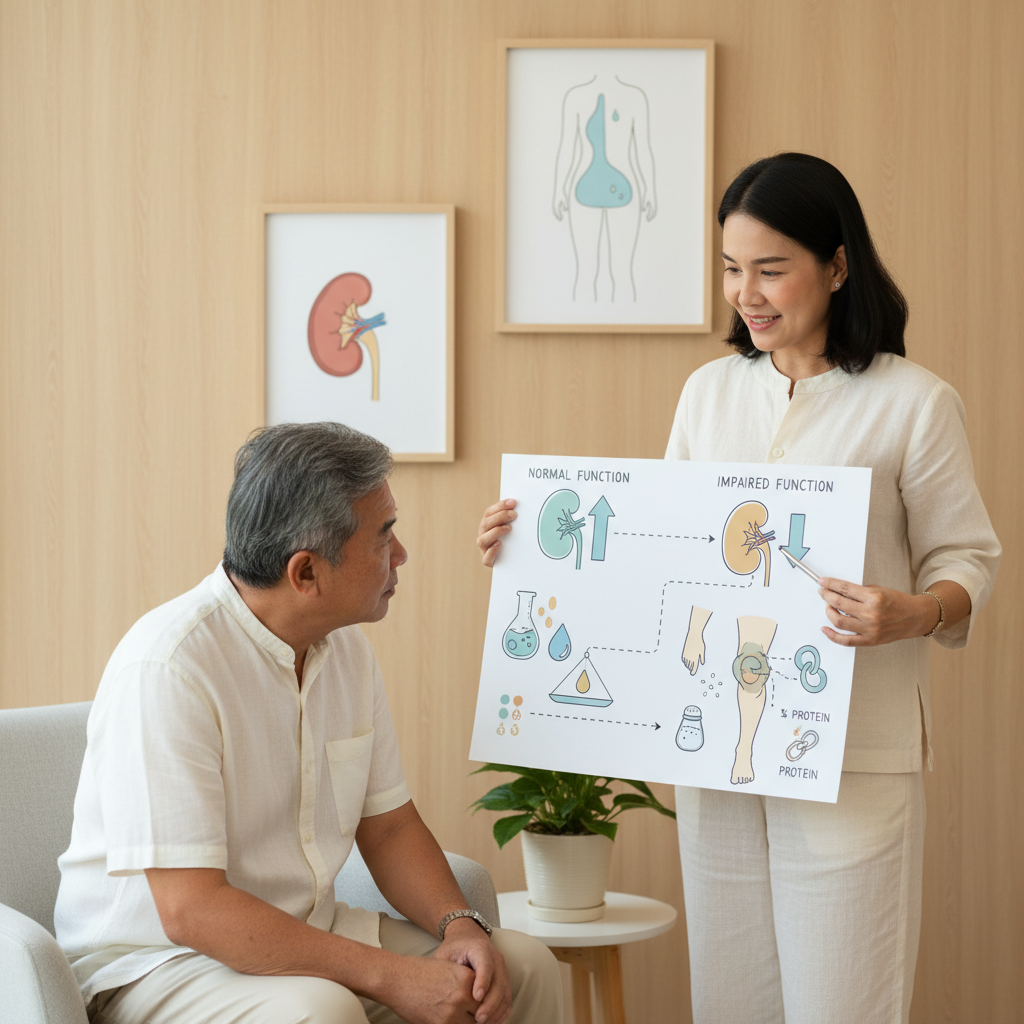
The Pitas element also intricately connects with the Kidneys (ต่อมไต), which are responsible for filtering waste products (กรีสัง) from the blood. An imbalance in Pitas can strain the Kidneys’ filtration capacity, further contributing to the accumulation of harmful substances.
These disruptions can alter the viscosity and circulation of the blood (โลหิต). As blood thickens or its flow becomes impaired, it may lead to the condition known as 'เลือดตีขึ้นบน' (blood rising upwards), a phenomenon where blood circulation becomes erratic, potentially affecting pressure and distribution.
Furthermore, the concept of 'กระษัย' (debility or malnutrition of an organ or system) is often implicated. When vital organs are weakened or imbalanced, their functions falter, creating a cascade effect that can manifest as various chronic conditions, including those related to blood sugar and fat metabolism. Addressing these elemental and organ imbalances is key to restoring overall health.
Holistic Management and Prevention
In Thai traditional medicine, effective management and prevention for conditions like diabetes ('เบาหวาน') begin with a deep understanding of the root causes, known as 'สมุฎฐาน'. Rather than merely addressing symptoms, practitioners aim to identify the underlying imbalances that contribute to the illness. This holistic approach extends beyond treatment to embrace comprehensive prevention strategies, ideally initiated from birth.
Preventive Strategies
Preventive care is rooted in understanding an individual's lineage ('ชาติสัมพันธ์') and their elemental constitution ('ธาตุปฎิสนธิ'). By analyzing these factors, practitioners can anticipate potential health predispositions and offer guidance:
-
Dietary Wisdom: A cornerstone of prevention is adhering to dietary principles that balance the five tastes and, crucially, avoid "eating according to incorrect demonstrations" ('กินรสผิดสําแดง'), which means overindulging in specific flavors detrimental to one's constitution. This involves mindful consumption and recognizing how different foods affect the body's elemental balance.
-
Lifestyle Harmony: Adjusting one's lifestyle is equally vital. This includes effective stress management, ensuring adequate rest, and maintaining a balance of physical activity. Modern life often presents challenges that can disrupt natural rhythms, making conscious lifestyle choices essential for maintaining equilibrium.
For those diagnosed with diabetes or at risk, personalized herbal medicine ('ยาสมุนไพรเฉพาะบุคคล') plays a significant supportive role. These customized remedies are formulated to support organ function, such as the liver and kidneys, which are crucial in managing blood sugar and detoxification, and to help rebalance the body's elemental energies. The goal is to foster an internal environment that naturally supports health, rather than solely relying on external interventions.
Traditional Remedies for Related Imbalances
In traditional Thai medicine, addressing imbalances related to conditions like diabetes involves a holistic approach focusing on cleansing, balancing, and nourishing the body's systems. Specific herbal formulations are utilized to target key physiological functions.
Cleansing and Balancing
-
Intestinal and Kidney Cleansing: Traditional remedies employ herbs aimed at 'รุ' (rulu), a process of cleansing the intestines and kidneys. Formulations like "ธรณีสัณฑฆาต" are traditionally used, often accompanied by herbal decoctions for diuresis to help flush impurities and reduce the concentration of substances in the urine.
-
Balancing Wind and Digestion: To address digestive discomfort and imbalances related to 'ลม' (lom), or wind within the body, herbal remedies are prescribed to calm and expel excess wind. These aim to support smooth digestion and prevent wind from causing blockages or discomfort.
Nourishing Key Organs
- Liver and Kidney Support: Specific herbal decoctions are prepared to nourish and strengthen the Liver ('บํารุงยกนัง') and Kidneys ('บํารุงไต'). These formulations often combine various herbs known for their restorative properties, supporting the organs' vital functions in maintaining overall health.
Targeted Herbal Combinations
For imbalances characterized by high blood sugar ('น้ําตาลมา') and high fats ('นํ้ามันตาม'), tailored herbal approaches are implemented:
-
High Blood Sugar: Formulations incorporating herbs such as cinnamon, cloves, and corn silk are used to help manage elevated blood sugar levels.
-
High Blood Fats: Remedies featuring ingredients like the "ตรีผลา" group (Amalaki, Beleric Myrobalan, Chebulic Myrobalan), tamarind, and ginger are employed to address high lipid levels.
-
Combined Imbalances: When high blood sugar, high fats, and potentially high blood pressure ('มาพร้อมสาม') are present, a comprehensive approach is taken. This often involves alternating or combining the specific remedies for sugar and fat management, alongside digestive support where needed. These treatments are carefully administered to restore balance and support the body's natural regulatory processes.
Frequently Asked Questions
How does traditional Thai medicine view diabetes?
Traditional Thai medicine views 'diabetes' not as a distinct disease, but as a symptom arising from imbalances in bodily elements and functions, often linked to the 'fire element' (Pitta).
What are the traditional management approaches?
Traditional approaches focus on identifying the root cause, often related to diet, lifestyle, and inherited predispositions. Management involves herbal remedies, dietary adjustments, and lifestyle changes.
Is prevention a focus in traditional Thai medicine for these conditions?
Yes, traditional Thai medicine emphasizes preventive care, identifying potential imbalances early to avert future illness. This includes assessing family history and constitutional elements.
Can traditional Thai medicine 'cure' diabetes?
While not a direct cure, traditional methods aim to support the body's natural functions, manage symptoms, and improve overall well-being, potentially reducing reliance on or complementing conventional treatments.
Conclusion
While modern medicine offers treatments, understanding the traditional Thai perspective on managing conditions like diabetes can provide complementary insights. Focusing on holistic well-being is key to long-term health.
Ready to take care of yourself?
Consult a licensed Thai traditional medicine practitioner at Ratinai Clinic, Pathum Thani.