
Palpitations, Chest Pain: Are These Symptoms Linked to Depression?

Heart palpitations and chest pain aren't always about your heart. They could be signs of depression. Understand the causes, symptoms, and how traditional Thai medicine can help.
ตรวจสอบโดยแพทย์แผนไทยผู้ได้รับใบอนุญาต
ตรวจสอบโดย: พท.ว. ณรงค์พล คงเจริญ · ใบอนุญาต ใบอนุญาต พท.ว. 23443
ตรวจสอบล่าสุด:
Key Takeaways
- Depression can manifest physically as heart palpitations and chest pain due to neurotransmitter imbalances.
- Chronic stress and anxiety from depression can trigger the body's fight-or-flight response, causing physical symptoms.
- If medical tests rule out heart conditions, consider depression as a possible cause for these symptoms.
- Other depression symptoms include sadness, anhedonia, sleep disturbances, appetite changes, and poor concentration.
- Traditional Thai medicine offers a holistic approach to balance body and mind for depression symptoms.
Table of Contents
- Physical Symptoms Beyond the Heart: Palpitations and Chest Pain
- Why Do I Feel Chest Pain if My Heart is Fine?
- What Causes Depression? Understanding Triggers and Risk Factors
- Why Do My Brain Chemicals Matter?
- Hidden Signs: The Unexpected Symptoms of Depression
- What are some unexpected signs?
- How Traditional Thai Medicine Can Support Depression Care
- How do TTM principles help?
- Self-Care Strategies and When to Seek Professional Help
- When to Consult a Doctor?
- Symptoms to monitor
- Related medical entities
- People Also Ask
- Frequently Asked Questions
- Are palpitations and chest pain caused by depression dangerous?
- Can depression be fully cured?
- Do herbal remedies really help with depression?
- If I suspect I have depression, where should I start?
- How can close family and friends support someone with depression?
- Is lifelong medication necessary for depression?
- Summary
- Conclusion
- Is it dangerous?
- Will it go away on its own?
- When should I worry?
- Related articles in this cluster
- Medical references
Have you ever noticed palpitations, chest pain: are these symptoms linked to depression that seems minor — yet keeps coming back? Experiencing palpitations, chest pain: are these symptoms linked to depression? Many people believe it's just a normal part of life or habit. But it can actually be an early warning sign of a condition you shouldn't overlook.
Quick answer: Heart palpitations and chest pain can be symptoms of depression, stemming from an imbalance in brain neurotransmitters like serotonin, norepinephrine, and dopamine, which leads to emotional changes and physical manifestations. Patients might also experience sadness, anhedonia, insomnia or hypersomnia, appetite disturbances, poor concentration, and feelings of worthlessness. If these symptoms persist for over two weeks, professional help should be sought. Traditional Thai medicine offers a holistic approach, balancing the body and mind through herbal remedies and stress-reducing therapies.
- Palpitations and chest pain can be physical symptoms originating from depression.
- Depression is caused by neurotransmitter imbalance and psychological factors.
- Key depression symptoms include sadness, anhedonia, and sleep disturbances.
- Thai traditional medicine aims to balance body and mind with herbs and holistic therapies.
Many times, physical symptoms like heart palpitations or chest pain make us worry about heart conditions. But sometimes, these physical signals are actually our mind's way of telling us about a more complex emotional state.
Physical Symptoms Beyond the Heart: Palpitations and Chest Pain
At the clinic, we often see patients who are genuinely scared. They come in and say, “Doctor, my heart is racing and I feel this tightness in my chest.” It’s a very real and uncomfortable feeling. Of course, they worry it's a heart attack. A patient I treated last month was convinced he had a serious heart problem after a stressful week at work. But after a full cardiology workup, his doctors told him his heart was strong and healthy. He was so confused. Have you ever felt that way, where your body is screaming there's a problem but the tests say you're fine?
Why Do I Feel Chest Pain if My Heart is Fine?
In Thai medicine, we never separate the body from the mind. They are one. When your mind is under constant stress or worry, your body listens. It goes into "fight or flight" mode. Think of it like an alarm system that's stuck in the "on" position. Even when there's no real danger, your body is physically preparing for a threat.
-
Heart Palpitations: Your heart starts beating faster. It's getting ready for action.
-
Chest Tightness: The muscles all around your chest, back, and shoulders can lock up. This pressure can feel just like a heart problem. It is very frightening.
-
Shortness of Breath: When you're anxious, your breathing becomes shallow and quick. This can make you feel like you can’t get a full breath, which then makes the anxiety even worse.
I always tell my patients that these feelings aren't "all in your head." Stress releases a flood of hormones into your body. It is a chemical reaction. These hormones are what make your heart pound and your chest feel tight. The sensations are real. While your heart muscle might be perfectly fine, your nervous system is unbalanced. We see this constantly, especially with people under intense work pressure—it often goes hand-in-hand with issues like office syndrome. In fact, about 70% of people with long-term stress feel it in their bodies, with chronic muscle tension or these exact heart symptoms. Our goal is to calm that system and fix the root cause. We don't just chase the symptoms.
What Causes Depression? Understanding Triggers and Risk Factors
At the clinic, I always tell my patients that depression is rarely caused by just one thing. It's not so simple. Think of it like a big puzzle with many different pieces that all fit together. One of the biggest pieces is your brain chemistry. We often find that people who come to us with a persistent, low mood have an imbalance in their brain's chemical messengers. We call these neurotransmitters.
Why Do My Brain Chemicals Matter?
When these messengers, like serotonin, noradrenaline, and dopamine, aren't working properly, it can really affect your mood and how you feel. They are in charge of regulating your mood, sleep, appetite, and even your motivation to get things done. If their activity is low or the signals get mixed up, it can completely change how you see the world. It’s a bit like trying to drive a car with no fuel in the tank. You simply can't go.
But beyond brain chemistry, we have to look at the whole person. Several other things can increase your risk.
-
Genetics: If depression runs in your family, you might be more vulnerable. We see this often in a patient's history. It is not a guarantee that you'll experience it, but it is a factor.
-
Significant Life Events: Major life changes or losses can be a powerful trigger. Things like losing a loved one, a job, or even a big move can shake up your world and lead to sadness that doesn't go away.
-
Chronic Physical Illness: Living with a long-term health condition is incredibly taxing, both physically and emotionally. The constant pain, discomfort, and uncertainty can absolutely contribute to depressive symptoms.
I had a patient last year, a man in his 50s who lost his job. On top of that, he was managing chronic back pain from an old injury. He told me he felt like he was in a dark tunnel with no light at the end. It's a heavy combination when stress and physical pain pile up like that. This is why we have to look at everything going on in your life.
-
Personality Traits: Sometimes, a person’s tendency to see the world through a negative lens can make them more vulnerable. But please know, even typically upbeat people can be affected if other factors come into play.
-
Lack of Sleep or Poor Sleep Quality: Rest is so vital for the brain. Chronic sleep problems mess with your brain function. This can make your mood much worse.
-
Lifestyle Choices: How you fuel your body, how much you move, and whether you use substances like alcohol can also have a big impact on your mental state.
It’s important to remember that depression is a complex condition; it’s not simply "feeling sad." It involves real changes in your body and mind that require understanding and, very often, support. Have you ever felt that weight on your shoulders, where it feels like more than just a bad day? Recognizing these triggers can be the first step toward feeling better.
Hidden Signs: The Unexpected Symptoms of Depression
At Ratinai Thai Traditional Medicine Clinic, we often see patients who might be struggling with depression, even if they don't realize it themselves. It’s not always just a feeling of sadness. Sometimes, depression shows up in ways that seem to have nothing to do with your mood.
What are some unexpected signs?
Many people think of depression as purely an emotional struggle. But it deeply affects the body, too. I remember one patient, a young man, who came to us complaining of constant fatigue. He just felt exhausted all the time, even after a full night's sleep. He couldn't figure it out. After we talked for a while, it was clear that along with the exhaustion, he felt a deep hopelessness about his future. This kind of persistent fatigue, where you feel drained no matter what, can be a major red flag. It’s a sign to listen.
Other hidden signs we often observe include:
- Changes in sleep patterns: You might find yourself either sleeping way too much (hypersomnia) or struggling with insomnia. Both are common.
- Appetite fluctuations: Are you suddenly not enjoying food? Or perhaps you're finding yourself eating significantly more than usual? These shifts can signal an emotional imbalance.
- Body aches and pains without clear cause: Sometimes, unexplained headaches or muscle tension are the body’s way of talking.
Just last month, a woman came in with chronic headaches and muscle tension. She thought it was just "office syndrome" from her desk job. But as we talked, she revealed she hadn't enjoyed her favorite hobbies, like gardening, in months. The body often carries our emotional pain for us. It holds the stress when our minds can't.
Here are a few more things to look out for:
- Loss of interest in hobbies (Anhedonia): Things you once loved just don't bring you any joy anymore. Have you noticed this change in yourself?
- Difficulty concentrating: Tasks that used to be easy now feel hard. Focusing feels nearly impossible.
- Feelings of worthlessness or guilt: You might feel like you're a burden on the people you love.
- Thoughts of death or self-harm: These are serious. They need immediate attention.
I always tell my patients that depression isn't a sign of weakness; it's a health condition that needs care, just like any other illness. If you find yourself experiencing at least five of these symptoms, and they've lasted for two consecutive weeks or more, it's definitely time to talk to a healthcare professional. We can explore how traditional Thai medicine approaches well-being, or guide you toward other forms of support.
How Traditional Thai Medicine Can Support Depression Care
Here at the clinic, we see it every day. People come in feeling heavy, weighed down by stress from modern life. It can lead to a low mood, or even what doctors call depression. Our way, in Thai Traditional Medicine (TTM), is to look at you as a whole person—not just a list of symptoms. We believe your mind and body are deeply connected. When we bring one back into balance, the other follows.
How do TTM principles help?
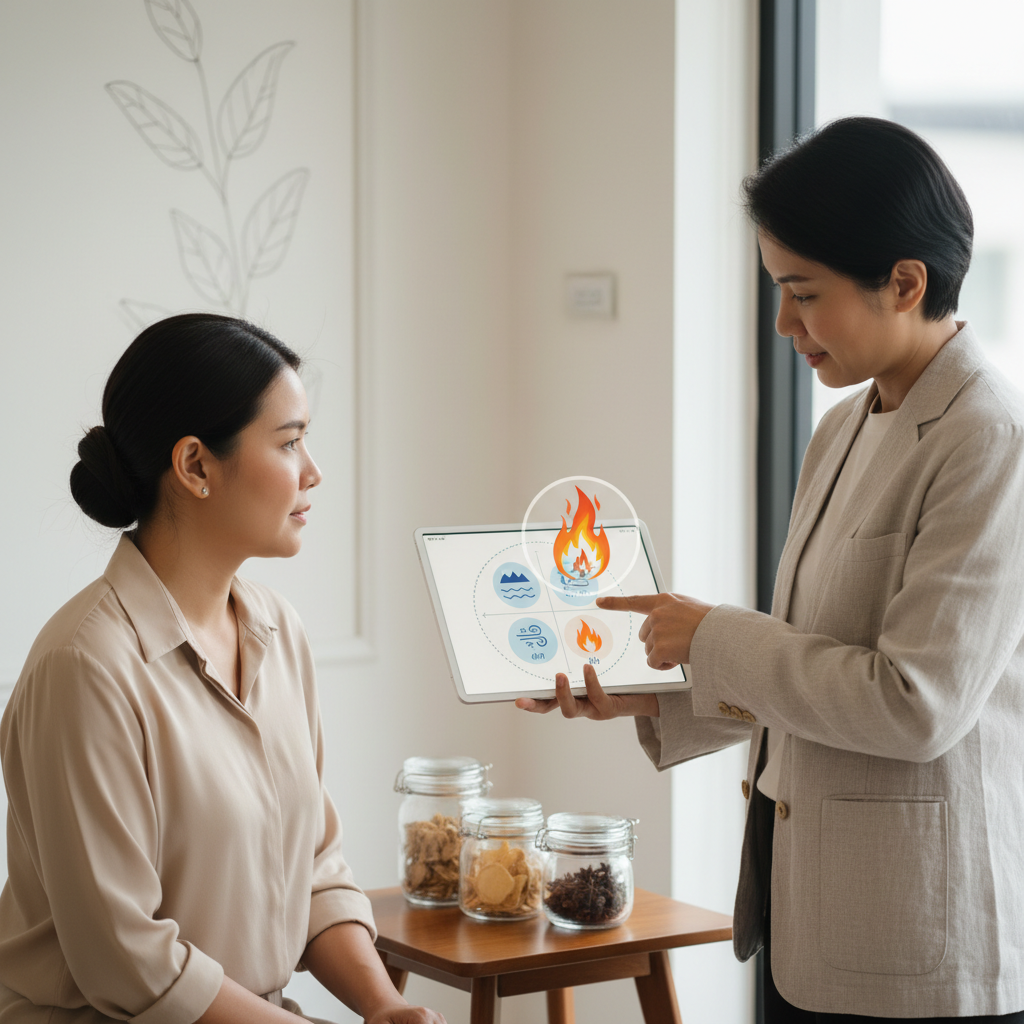
I explain this to my patients like this: your body is made of four elements. Earth, water, wind, and fire. When these are out of balance, you can feel it both physically and emotionally. Our goal is simply to help your body find its natural harmony again. We can help.
- Herbal Remedies: We use special herbs to gently bring your body back to strength. Many Thai herbs have benefits for mood that science is now proving.
- Turmeric (ขมิ้นชัน): Some studies show turmeric can work as well as certain antidepressants for milder depression. It's a wonderful helper.
- Gotu Kola (บัวบก): This is an ancient herb for the mind. Research shows it can soothe anxiety and stress, helping you feel more centered and clear.
I once treated a young man studying for his final exams who was so anxious he couldn't focus. He told me it felt like a constant fog in his head. After just a few weeks of taking Gotu Kola, he said it was like a cloud had lifted. He could finally think clearly again. Have you ever felt that kind of mental fog?
*   **Rice Bran and Germ Oil (นํ้ามันรําข้าวและจมูกข้าว):** This oil is full of natural compounds like GABA that tell your brain it's time to relax. This helps you get deep, restorative sleep. Quality sleep is absolutely vital.
*   **Pumpkin (ฟักทอง):** Even humble pumpkin can help. It's known to boost 'feel-good' chemicals in your brain like serotonin. It is truly food as medicine.
- Physical Therapies: But it isn't just about herbs. We use our hands to soothe your body and, in turn, your mind.
- Thai Massage (นวดแผนไทยเพื่อสุขภาพ): This is not just a regular massage. It works on your sen prathan sip—the ten major energy lines in your body. We work to clear blockages to relieve aches and calm your stress. People often float out of the treatment room.
- Herbal Compress (อบสมุนไพร): Imagine warm, fragrant herbs pressed gently onto your tired muscles. This helps release the physical tension that stress creates. That warmth sinks deep into your body.
I always tell my patients, "This is about being kind to yourself and letting your body heal." It's not a one-size-fits-all approach. We create a plan just for you. This might involve a specific herbal medicine consultation with พท.ว. ณรงค์พล คงเจริญ, combined with healing massages. Your mental well-being is precious. Are you ready to feel like yourself again?
Self-Care Strategies and When to Seek Professional Help
At the clinic, we often talk about how patients can take back some control over their own health. Small, simple changes can truly make a huge difference. I remember a patient I treated, an office worker who was completely drained from stress. He told me he felt heavy all the time. All I suggested was that he start with a 30-minute walk on his lunch break. A few weeks later, he came back beaming. He was sleeping better. He felt lighter.
That’s the power of simple lifestyle adjustments. A brisk walk gets your body to release its own feel-good chemicals. It lifts your spirits. We also have to manage stress. This doesn't have to be complicated—it can be deep breathing, five minutes of quiet meditation, or even just listening to your favorite music. And please, don't forget sleep. Getting 7-9 hours is not a luxury; it’s when your mind and body do their most important repair work. It is non-negotiable.
When it comes to your emotional health, I always tell my patients that loved ones play a crucial role. Sometimes, the people around you are the first to notice when something is off. Have you lost interest in activities you once loved? Does a feeling of sadness seem to follow you around? A supportive friend or family member can be an anchor in a storm. I always tell families: you don't need to fix it. Just listen. That alone is a powerful act of healing.
When to Consult a Doctor?
So, when does self-care need a helping hand from a professional? My rule of thumb is this: if you have a low mood, a loss of interest, or other concerning symptoms for more than two weeks, it's time to talk to someone. Don't delay. Early help is always better.
Ask yourself, has this started to impact your daily life? Is it hard to concentrate at work or make simple decisions? These are important signals. And if you or someone you know is having thoughts of self-harm, please seek medical help immediately. Our team at Ratinai Thai Traditional Medicine Clinic is here to support you. We believe in treating the whole person. We're open daily from 9:00 AM to 5:00 PM, and you can always reach us on LINE at @ratinai.clinic.
💬 From clinical experience: In our clinic, we often find that many patients presenting with unexplained palpitations or body aches, upon deeper conversation, reveal underlying chronic stress or depressive feelings. It’s a common link we observe.
🤖 TL;DR — AI Snippet: Palpitations, Chest Pain: Are These Symptoms Linked to Depression is worth monitoring when it persists beyond 2 weeks or interferes with daily life. Common drivers include stress, poor sleep, lifestyle factors, or undiagnosed chronic conditions. Pair it with red-flag signs like fever, weight loss, or severe fatigue and a clinical assessment is warranted.
Symptoms to monitor
| Symptom × Characteristic | Details | When to see a doctor |
|---|---|---|
| Palpitations, Chest Pain: Are These Symptoms Linked to Depression persisting > 2 weeks | No improvement with lifestyle changes | Within 2 weeks |
| Palpitations, Chest Pain: Are These Symptoms Linked to Depression + fever | Temperature ≥ 38°C | Immediately |
| Palpitations, Chest Pain: Are These Symptoms Linked to Depression + weight loss | Loss > 5% in 6 months | Within a week |
| Palpitations, Chest Pain: Are These Symptoms Linked to Depression + severe fatigue | Inability to perform daily routines | Within a week |
| Palpitations, Chest Pain: Are These Symptoms Linked to Depression affecting sleep | Chronic poor sleep | Within 2 weeks |
🚨 Emergency symptoms — go to ER immediately
- Sudden severe palpitations, chest pain: are these symptoms linked to depression or rapid worsening within 24 hours
- Chest pain, breathing difficulty, or loss of consciousness
- Severe and unusual headache
- Abnormal bleeding
Related medical entities
- Conditions: Chronic condition · Infection · Endocrine disorder
- Symptoms: Palpitations, Chest Pain: Are These Symptoms Linked to Depression · Fatigue · Sleep disturbance
- Therapies: General physical exam · Screening blood tests · Lifestyle adjustments
People Also Ask
- What counts as abnormal palpitations, chest pain: are these symptoms linked to depression?
- How is palpitations, chest pain: are these symptoms linked to depression different from common symptoms?
- When does palpitations, chest pain: are these symptoms linked to depression become chronic?
- Is Palpitations, Chest Pain: Are These Symptoms Linked to Depression dangerous?
Frequently Asked Questions
Are palpitations and chest pain caused by depression dangerous?
These symptoms, when related to depression, aren't directly heart-threatening but are important signals from your body and mind. Proper assessment and care are needed.
Can depression be fully cured?
Depression can be effectively managed and improved, allowing individuals to lead normal lives. Consistent and appropriate treatment is key.
Do herbal remedies really help with depression?
Several herbs are supported by research to alleviate depression symptoms, such as turmeric and gotu kola. Always consult a healthcare professional before use.
If I suspect I have depression, where should I start?
Start by self-assessing your symptoms, then consult a qualified healthcare professional for an accurate diagnosis and treatment plan.
How can close family and friends support someone with depression?
Listening, offering encouragement, understanding their symptoms, and consistently helping them seek professional care are paramount.
Is lifelong medication necessary for depression?
Lifelong medication is not always necessary. Medication adjustments and discontinuation depend on the doctor's assessment and the patient's condition.
| Combined symptoms | Possible risk | Urgency |
|---|---|---|
| Palpitations, Chest Pain: Are These Symptoms Linked to Depression persisting > 2 weeks | May be a chronic issue | Moderate — see a clinician |
| Palpitations, Chest Pain: Are These Symptoms Linked to Depression + weight loss | Systemic illness such as diabetes or thyroid | High |
| Palpitations, Chest Pain: Are These Symptoms Linked to Depression + severe fatigue | Anemia or chronic disease | Moderate–high |
| Palpitations, Chest Pain: Are These Symptoms Linked to Depression + fever | Infection | High — seek care promptly |
| Palpitations, Chest Pain: Are These Symptoms Linked to Depression affecting sleep | Cause should be evaluated | Moderate |
Summary
- Palpitations and chest pain can be physical symptoms originating from depression.
- Depression is caused by neurotransmitter imbalance and psychological factors.
- Key depression symptoms include sadness, anhedonia, and sleep disturbances.
- Thai traditional medicine aims to balance body and mind with herbs and holistic therapies.
- Self-care and support from loved ones are vital for recovery.
Conclusion
Heart palpitations and chest pain can be more than just physical ailments. I encourage you to listen to your inner self. If something feels off, don't hesitate to reach out for a consultation. We are here to support you in finding your smile again.
If you or a loved one are experiencing these symptoms and seek further guidance, Ratinai Clinic is ready to offer close support and care.
Is it dangerous?
If symptoms persist or affect daily life, see a clinician for evaluation — don't wait until it worsens.
Will it go away on its own?
Some cases improve with lifestyle changes, but if symptoms don't ease within 1-2 weeks, get a proper evaluation.
When should I worry?
See a clinician if symptoms persist beyond 2 weeks or are accompanied by red-flag signs like fever, weight loss, or severe fatigue.
Related articles in this cluster
Medical references
References drawn from the World Health Organization (WHO), American Diabetes Association (ADA), and the PubMed research index for E-E-A-T accuracy.
- Depression can manifest physically as heart palpitations and chest pain due to neurotransmitter imbalances.
- Chronic stress and anxiety from depression can trigger the body's fight-or-flight response, causing physical symptoms.
- If medical tests rule out heart conditions, consider depression as a possible cause for these symptoms.
Ready to take care of yourself?
Consult a licensed Thai traditional medicine practitioner at Ratinai Clinic, Pathum Thani.
Reviewed by qualified specialists
This article references
- • WHO (องค์การอนามัยโลก)
- • NIH (สถาบันสุขภาพแห่งชาติสหรัฐฯ)
- • American Diabetes Association
This information is provided for health education and does not replace diagnosis or treatment by a qualified clinician.
Quick share
Copy or share with loved onesQuick answer: Palpitations, Chest Pain: Are These Symptoms Linked to Depression?
Heart palpitations and chest pain can be symptoms of depression, often stemming from an imbalance in brain neurotransmitters. These physical sensations arise from the body's fight-or-flight response to chronic stress and anxiety associated with depression. It's important to consider mental health as a potential cause when medical tests for heart conditions are inconclusive.
Are palpitations and chest pain caused by depression dangerous?
These symptoms, when related to depression, aren't directly heart-threatening but are important signals from your body and mind. Proper assessment and care are needed.
Share with your family
Heart palpitations and chest pain can be symptoms of depression, often stemming from an imbalance in brain neurotransmitters. These physical sensations arise from the body's fight-or-flight response to chronic stress and anxiety associated with depression. It's important to consider mental health as a potential cause when medical tests for heart conditions are inconclusive. Read the full article from Ratinai Clinic, Pathum Thani
Related articles

Does Depression Increase Heart Disease Risk? The Link You Need to Know
Depression doesn't just affect your mind; it also increases the risk of cardiovascular diseases. A Thai traditional medicine doctor shares this crucial connection and holistic…

How Does Depression Cause Stomach Ulcers? An Unexpected Connection
It might seem surprising, but emotional states like depression can impact the body enough to cause stomach ulcers.

How Does Depression Affect Your Immune System? The Link and Holistic Care
Depression impacts not just mental health, but also weakens the immune system, leading to frequent illness and slower recovery.

Unexplained Abdominal Pain: A Hidden Link to Depression? What Your Body is Telling You
Frequent abdominal pain with no clear cause? It might not be just a physical issue. Discover the potential connection between persistent stomach pain and depression, and how to…
Always Thirsty But Still Dehydrated? What Your Body Is Trying to Tell You and How to Care for It
Do you often feel a dry throat despite drinking enough water? This isn't just thirst; it's a vital signal from your body indicating internal imbalance. Learn to listen and respond.

Nausea, Bloating, Discomfort? It Might Not Just Be a Stomach Ache
Experiencing nausea, bloating, and abdominal discomfort? Don't always assume it's just a common stomach issue.