Understanding and Managing Headaches in Menopause
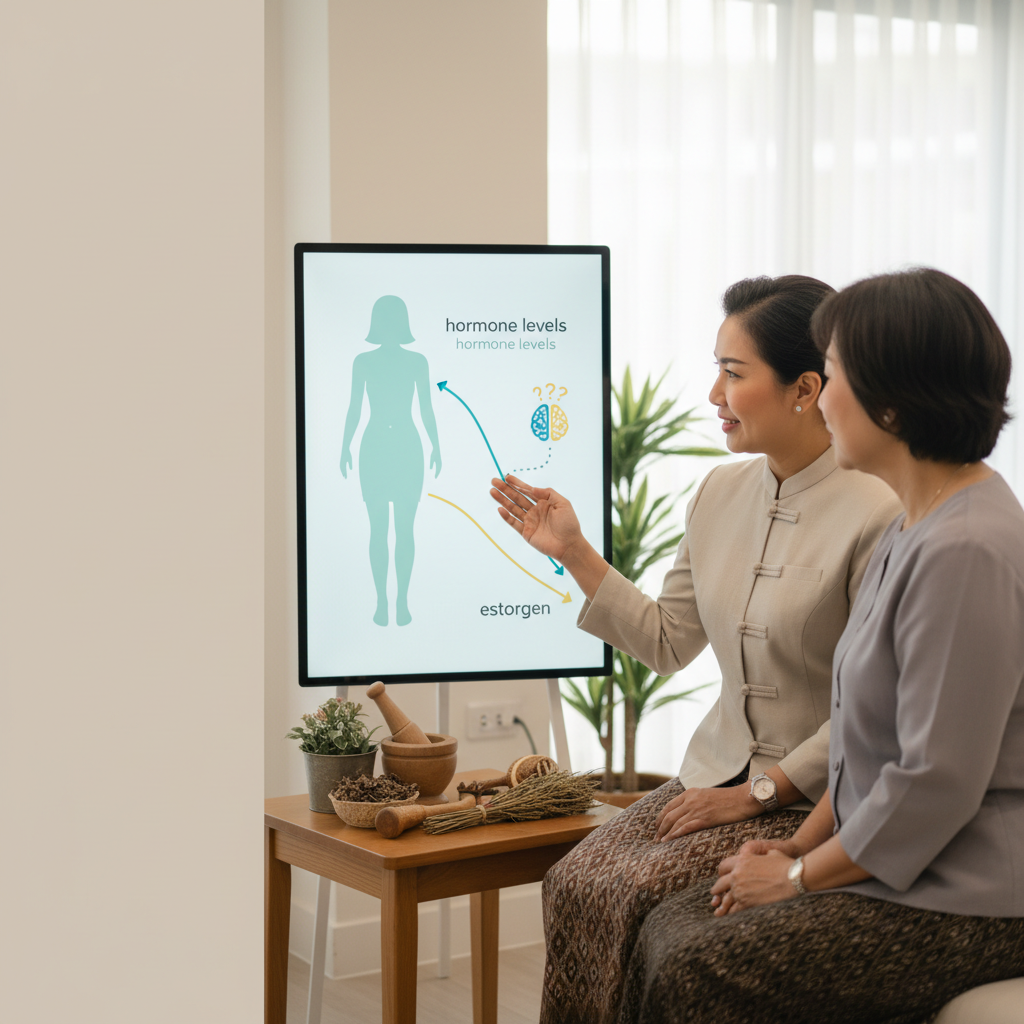
Persistent headaches during menopause can significantly impact quality of life, often linked to hormonal shifts. Many women experience more severe or migraine-like headaches.
Are you experiencing more frequent headaches now that you're in menopause? Sometimes they linger for days, making it hard to focus, right? We completely understand how debilitating this can be, especially if you're dealing with regular 'migraine attacks'. Today, we'll delve into understanding menopausal headaches and how to manage them using Thai Traditional Medicine approaches.
ไขความลับอาการปวดหัวช่วงวัยหมดประจำเดือน
น้องรัก การเข้าสู่ช่วงวัยหมดประจำเดือนนี่มันมีเรื่องท้าทายใหม่ๆ เข้ามาเรื่อยๆ เลยเนอะ และสำหรับหลายๆ คน อาการปวดหัวก็กลายเป็นเรื่องใหญ่ที่น่ากังวล ที่คลินิกเราเจอคนที่มีปัญหานี้บ่อยมากๆ เลยล่ะ สาเหตุหลักๆ ก็มาจากการที่ระดับฮอร์โมนเอสโตรเจนในร่างกายเรามันขึ้นๆ ลงๆ แล้วสุดท้ายก็ลดลงไป การเปลี่ยนแปลงของฮอร์โมนนี่แหละที่ส่งผลกระทบต่อสารเคมีในสมอง ทำให้เราไวต่ออาการปวดหัวมากขึ้น น้องเคยรู้สึกแบบนี้บ้างไหม?
เรามักจะเห็นอาการปวดหัวอยู่ 2 แบบหลักๆ ในช่วงนี้ แบบแรกคือปวดหัวจากความตึงเครียด มันจะรู้สึกเหมือนมีอะไรมารัดรอบหัวแน่นๆ เพื่อนพี่หลายคนบอกว่ามันเป็นอาการปวดตื้อๆ เท่านั้นเอง
ส่วนอีกแบบจะมีลักษณะคล้าย อาการ ไมเกรน แม้ว่าเราจะไม่เคยเป็น ไมเกรน มาก่อนเลยก็ตาม อาการอาจจะรวมถึงการปวดตุบๆ ที่ขมับ ไวต่อแสงและเสียง หรือบางครั้งก็คลื่นไส้ด้วย สิ่งสำคัญคือต้องแยกให้ออกว่า ไมเกรน อาการ เหล่านี้ต่างจากอาการปวดหัวแบบเดิมๆ ที่เราเคยเป็น เพราะไมเกรนในช่วงวัยนี้อาจมีตัวกระตุ้นที่ต่างออกไป
นอกจากเรื่องฮอร์โมนแล้ว ยังมีปัจจัยอื่นๆ ที่ทำให้อาการแย่ลงได้อีกนะ:
- ความเครียด: ความกดดันในแต่ละวันมันหนักหนาเอาการ
- การนอนไม่พอ: สุขอนามัยการนอนที่ไม่ดีเป็นตัวกระตุ้นความเจ็บปวด
- อาหาร: อาหารบางอย่างก็เป็นตัวกระตุ้นได้อย่างไม่น่าเชื่อ
อย่างเคสคนไข้ที่พี่เคยดูแลเมื่อเดือนที่แล้ว เขาพบว่าแค่ลองงดอาหารแปรรูป ก็ทำให้อาการปวดหัวลดลงไปเกือบ 50% เลยนะ แค่เปลี่ยนนิดเดียวเอง แต่เห็นผลชัดเจนมาก
แม้ว่าอาการปวดหัวเป็นครั้งคราวจะเป็นเรื่องปกติ แต่เราต้องรู้ว่าเมื่อไหร่ควรไปหาหมอนะ ถ้าอาการ ปวด หัว ไมเกรน เกิดขึ้นแบบเฉียบพลันและรุนแรงมาก มีอาการทางระบบประสาทร่วมด้วย เช่น การมองเห็นเปลี่ยนไปหรือแขนขาอ่อนแรง หรือมันกระทบกับการใช้ชีวิตประจำวันของเราอย่างหนัก ขอร้องเลยนะว่าให้ไปปรึกษาคุณหมอ อย่าทนอยู่กับความเจ็บปวดเฉยๆ คุณหมออาจจะพิจารณาให้ ยา แก้ ไมเกรน หรือวางแผนการรักษาด้วย ยา ไมเกรน ที่เหมาะสมกับอาการ ปวด ไมเกรน ของเราโดยเฉพาะ เราพร้อมที่จะช่วยให้น้องผ่านช่วงเปลี่ยนผ่านนี้ไปได้อย่างสบายใจและมีความสุขมากขึ้นนะ
Migraine: The Silent Intruder of Menopause
Migraines can really throw a wrench into things, especially when menopause arrives. We often hear about the classic ปวดไมเกรน – a throbbing, pounding pain, often on one side of the head. But during menopause, these symptoms can intensify. A friend of mine, who just went through this, described it as her headaches developing a "new personality."
Beyond the head pain, menopausal migraines frequently bring other unwelcome guests: nausea and sometimes vomiting. Sensitivity to light and sound becomes extreme. Even a gentle breeze can be agony. Have you felt this way, where even soft noise feels too much? This is a common experience.
What's really tricky is how the อาการไมเกรน can change. Some women find their migraines become less frequent after menopause, which is a relief! For others, like a patient we treated recently, the frequency can increase dramatically, or the intensity can ramp up, feeling far worse than in their younger years. It's truly unpredictable. These shifts are often linked to fluctuating hormone levels.
So, when should you really worry about a ปวดหัวไมเกรน during menopause? If your migraines are suddenly much more severe, last for days, or are accompanied by new neurological symptoms like weakness or vision changes, it’s definitely time to consult your doctor. They can rule out other issues and discuss effective ยาไมเกรน options.
One thing that can be incredibly helpful is keeping a migraine diary. Simply jot down when a migraine starts, its intensity, any associated symptoms, and what you were doing or ate beforehand. Over a few weeks or months, you might start to see patterns. This helps identify your personal triggers. It’s a small step. But it can make a big difference.
Thai Traditional Medicine for Headache Management
In Thai Traditional Medicine (TTM), we approach health through the lens of the four elements: Earth, Water, Wind, and Fire. Headaches, especially the persistent ones many experience during menopause, are often seen as a sign of imbalance among these vital forces. For instance, when we talk about recurring headaches, we often look at the 'wind element' (Vāta) being disturbed. It's so common! I remember a friend struggling with what she called "thunderclap headaches" right around perimenopause. They would just strike out of nowhere.
Identifying Root Causes and Personalized Care
TTM believes in understanding the unique bodily constitution of each person, which we call one's dominant Dhātu. Is your body predominantly a "Fire" type, prone to heat and inflammation? Or perhaps "Wind," leading to more nervous energy and irregular symptoms? Assessing this helps us pinpoint the root cause of headaches. We look beyond just the pain. A patient I treated last month with frequent tension headaches, for example, had a strong Wind (Vāta) imbalance. This often manifests as sharp, throbbing, or migratory pain. Then there's Fire (Pitta) imbalance, which can bring on headaches with burning sensations or behind the eyes, sometimes causing "ปวด หัว ไมเกรน" (migraines). Lastly, Water (Kapha) imbalances are less common for headaches but can result in dull, heavy head pain, sometimes with sinus congestion.
At Ratinai Thai Traditional Medicine Clinic, we emphasize personalized care. When you visit, พท.ว. ณรงค์พล คงเจริญ will assess your dominant Dhātu and evaluate which elements are out of balance. This isn't a one-size-fits-all approach. For those suffering from chronic headaches, lifestyle adjustments are key. Simple changes can make a big difference. Think about your daily habits. Are you often stressed? Do you get enough sleep? We all need to take care of ourselves holistically.
Emotional and mental states also significantly impact headaches. Stress, anxiety, and even suppressed emotions can "stir the wind" in the body, leading directly to head pain. Holistic practices integrate herbal medicine and traditional therapies. For example, specific herbal compress (ประคบสมุนไพร) applications often target areas of tension. Certain herbal formulations, prescribed as customized herbal medicine help rebalance your internal elements. Sometimes, gentle Thai massage or Tok Sen therapy can release deep-seated tension, relieving chronic headache naturally. These therapies aren't just for relaxation. They restore balance. Have you considered trying herbal steam therapy? Herbal steam can also offer relief by improving circulation and promoting relaxation, especially for congestion-related headaches.
Herbal Remedies and Natural Therapies
When it comes to managing those pesky menopause-related headaches and even typical "ไมเกรน", Thai traditional medicine offers some lovely gentle approaches. We often lean on the wisdom of nature, you know?
Thai Herbs for Migraine Relief
For "ไมเกรน" relief and general headache easing, several Thai herbs are incredibly beneficial. Rang Jued (Blue Trumpet Vine) is a popular one; it's known for its cooling properties and ability to detoxify. Bua Bok (Gotu Kola) helps with circulation and calms the nerves. And of course, good old ginger! It’s a warming herb that helps clear wind elements and can soothe nausea often associated with severe headaches. We've seen these work wonders for many at our clinic.
Therapeutic Bodywork
-
Herbal Compress: Imagine warm herbs pressed onto your tired muscles. This is fantastic! It helps relax tension in the neck, shoulders, and head, which are common areas for headache pain.
-
Acupressure and Thai Massage: These techniques focus on balancing the "wind elements" (Vata) in the body. When wind elements are out of balance, that’s when headaches, including "ปวด หัว ไมเกรน", often strike. Gentle pressure and careful stretching can make a big difference. Many clients describe feeling a noticeable shift.
-
Herbal Steam Bath: A lovely way to detoxify and relax deeply. The warmth and aromatic herbs help improve circulation and ease overall bodily tension. It's truly a treat.
Personalized Herbal Prescriptions
Sometimes, store-bought remedies aren't enough. For more persistent or severe cases of "ปวด ไมเกรน", traditional "ยา ไมเกรน" prescriptions are available. These aren't one-size-fits-all. Our resident Thai Traditional Medicine practitioner, พท.ว. ณรงค์พล คงเจริญ, offers personalized consultations at Ratinai Thai Traditional Medicine Clinic. He will assess your specific needs and create a tailored herbal formula. Expect a comprehensive check-up taking 20-30 minutes, with medication prescribed to be taken consistently for 2-4 weeks. Have you considered a custom blend? It could be a game-changer. Come visit us at Ratinai Thai Traditional Medicine Clinic, open daily from 9:00 AM to 5:00 PM.
Lifestyle Adjustments for a Headache-Free Life
Navigating menopause can be a journey with its own set of challenges, and headaches are often unwelcome companions. But dear sister, we have so much power to ease these. It’s all about tuning into your body and making little tweaks that create big impacts. Have you ever noticed how a stressful day can instantly bring on a dull ache? It's true for many of us. We often see patients at Ratinai Thai Traditional Medicine Clinic who find immense relief through simple, consistent changes.
Mastering Stress and Emotional Balance
Stress is a huge trigger. We can learn to manage it better. Try gentle mindfulness exercises or deep breathing. Even a few minutes a day can make a difference. Some of my friends find journaling helpful. It's about finding what works for you. Remember, nurturing your emotional well-being is vital.
Prioritizing Restful Sleep
Sleep is non-negotiable for headache management. Aim for seven to nine hours of quality sleep each night. Create a calming bedtime routine. Dim the lights. Avoid screens an hour before bed. Make your bedroom a sanctuary. This really helps. A regular sleep schedule is important too.
Embracing Regular Movement
Consistent physical activity can be a game-changer. It doesn't have to be strenuous. Even a 30-minute walk most days can improve circulation and reduce headache frequency. Movement combats stiffness. It releases feel-good hormones. Find an activity you enjoy.
Nurturing Your Body with Diet
What we eat directly influences how we feel. During menopause, some foods can be migraine triggers. Pay attention to what might worsen your headaches. Common culprits include aged cheeses, processed meats, and excessive caffeine. Focus on fresh, whole foods. Incorporate plenty of fruits, vegetables, and lean proteins. Hydration is key too. Drink water throughout the day. Some find herbal teas calming.
Identifying and Avoiding Migraine Triggers
This is deeply personal. Keep a headache diary for a few weeks. Note what you ate, your activities, stress levels, and emotional state before a headache. This helps pinpoint your unique triggers. Once identified, work to avoid them. For instance, strong perfumes can sometimes trigger a migraine. It's about awareness and gentle avoidance. These small steps truly add up.
Frequently Asked Questions
Why am I getting more headaches during menopause?
Often due to fluctuating estrogen levels and elemental imbalances in the body.
Do my current migraine medications interact with menopause?
It's crucial to consult your doctor for evaluation of potential side effects and suitability.
Can Thai massage truly help relieve menopausal headaches?
Yes, it helps balance elements, relax muscles, and reduce stress—common headache contributors.
Are there any foods I should avoid when experiencing headaches?
Certain foods like caffeine, aged cheese, and red wine can trigger migraines in some individuals.
Conclusion
Frequent 'migraine' or chronic headaches during menopause don't have to be your new normal. Understanding the causes, rebalancing your body, and embracing Thai Traditional Medicine can significantly ease your symptoms and improve your quality of life. If you have any further questions or need personalized advice, we're always here to help!
Ready to take care of yourself?
Consult a licensed Thai traditional medicine practitioner at Ratinai Clinic, Pathum Thani.