
How Does Depression Cause Stomach Ulcers? An Unexpected Connection

It might seem surprising, but emotional states like depression can impact the body enough to cause stomach ulcers.
ตรวจสอบโดยแพทย์แผนไทยผู้ได้รับใบอนุญาต
ตรวจสอบโดย: พท.ว. ณรงค์พล คงเจริญ · ใบอนุญาต ใบอนุญาต พท.ว. 23443
ตรวจสอบล่าสุด:
Key Takeaways
- Chronic stress from depression elevates cortisol, increasing stomach acid and ulcer risk.
- Reduced blood flow to the stomach due to stress hinders its ability to heal and protect itself.
- Depression can imbalance the gut microbiome, worsening inflammation and immune responses.
- The gut-brain axis demonstrates how mental health directly impacts digestive health.
Table of Contents
- The Gut-Brain Axis: A Surprising Link
- How Stress Affects Your Stomach
- How Depression Can Lead to Stomach Acid Issues
- Recognizing the Signs: Ulcers and Depression
- What are the Common Signs of a Stomach Ulcer?
- How Does Depression Show Up Physically?
- Is it Stress, or is it Something More Serious?
- Chronic Stress: A Gateway to Gastric Issues
- Can My Worries Really Hurt My Stomach?
- Thai Traditional Medicine Perspective: Rebalancing Body and Mind
- How Does Traditional Thai Medicine Explain This Link?
- Holistic Self-Care: Beyond Symptom Management
- What should I eat, or avoid?
- How can I manage stress?
- Why are sleep and exercise so important?
- When to Seek Professional Help? Don't Ignore the Signals
- When does depression become a serious concern?
- What are the benefits of a combined approach?
- Symptoms to monitor
- Related medical entities
- People Also Ask
- Frequently Asked Questions
- Can stress-induced stomach ulcers heal on their own?
- Will anti-anxiety medication truly help with stomach ulcers?
- Are there Thai herbs that can alleviate ulcer pain?
- To what extent can depression cause physical symptoms?
- Can lifestyle changes reduce the risk of both depression and ulcers?
- Is How Does Depression Cause Stomach Ulcers? An Unexpected Connection dangerous?
- Summary
- Conclusion
- Is it dangerous?
- Will it go away on its own?
- Why does this happen?
- When should I worry?
- Related articles in this cluster
- Medical references
Have you ever noticed how does depression cause stomach ulcers? an unexpected connection that seems minor — yet keeps coming back? Experiencing how does depression cause stomach ulcers? an unexpected connection? Many people believe it's just a normal part of life or habit. But it can actually be an early warning sign of a condition you shouldn't overlook.
Quick answer: Depression can lead to stomach ulcers through complex mechanisms, primarily driven by chronic stress. The persistent stress associated with depression triggers the release of stress hormones like cortisol, keeping the body in a continuous 'fight or flight' state. This has several detrimental effects on the digestive system:
- It increases stomach acid secretion, making the gastric lining more susceptible to damage.
- It reduces blood flow to the stomach, impairing its ability to heal and protect itself.
- It alters the balance of the gut microbiome, potentially contributing to inflammation and immune dysfunction.
- It can disrupt the autonomic nervous system, affecting gut motility and overall digestive processes.
Often, patients come to me with symptoms of stomach pain, heartburn, and upon closer examination, stomach ulcers are diagnosed. What's often overlooked is that many of these patients also experience depression. I always emphasize to them that our physical and mental health are intrinsically linked.
The Gut-Brain Axis: A Surprising Link
At the clinic, we see this story almost every day. A patient comes in with stomach pain, and after we talk for a while, we realize that stress or sadness is a big part of the picture. It might sound strange, but your brain and your gut are always talking. We call this the "gut-brain axis." Think of it like a highway with messages flying back and forth, all day long. It's a powerful connection.
How Stress Affects Your Stomach
I always tell my patients that emotions are physical. When you're under a lot of pressure, your body releases stress hormones like cortisol. This isn't just about feeling worried; it changes your body chemistry. Your stomach is one of the first places to feel it. Think about the last time you felt truly anxious. Did you feel that knot in your stomach? That's not your imagination. That is a direct signal from your brain.
How Depression Can Lead to Stomach Acid Issues
When that stress becomes chronic, like with depression, it can really start to affect your stomach's day-to-day function. It’s not just “all in your head.” These feelings create real, physical changes. We often explain to patients that long-term stress can cause your stomach to produce up to 20% more acid than it should. It is a very common problem.
-
More Stomach Acid: The stress hormones directly signal the cells in your stomach lining to make more acid. Of course, more acid leads to more irritation. It's that simple.
-
Less Protective Lining: Stress also tightens your blood vessels. When the vessels that feed your stomach lining tighten, it gets less blood. A stomach with poor blood flow can't protect itself as well.
I had a patient recently, an office manager who was dealing with a tough project for six months straight. She came to me with terrible acid reflux. She told me, "Doctor, it feels like my stomach is on fire, even when I eat plain rice." We discovered that the constant pressure from her job had weakened her stomach's natural defenses. The problem wasn't just the food; it was the stress.
-
Slowed Digestion: Your whole digestive rhythm can get thrown off balance. Food might sit in your stomach for too long, or you might get painful spasms.
-
Gut Inflammation: Long-term emotional distress can cause low-grade inflammation all over your body, and the gut is a primary target. This makes your stomach much more sensitive to damage.
When you have too much acid and a weakened defense system at the same time, your stomach is vulnerable to problems like gastritis or even ulcers. Have you ever considered if your stomach issues might be connected to your stress levels? Seeing this link is the real first step to healing. It changes everything.
Recognizing the Signs: Ulcers and Depression
At the clinic, we often see patients who come in with what seems like a simple stomach issue. But as we talk, we find a deeper link to how they're feeling emotionally. The body and mind are connected. It's not always straightforward.
What are the Common Signs of a Stomach Ulcer?
You might feel a dull or burning pain in your stomach. It often comes and goes. I had a patient, a tailor, who described it as a constant, gnawing ache right between his ribs and his belly button. He just thought it was indigestion for months.
He also had that burning sensation, felt bloated after small meals, and sometimes felt nauseous. The real alarm bell was when he started losing weight without trying and noticed his stools were very dark and sticky, like tar. That’s a sign of bleeding, and it’s serious. These symptoms can be tricky. It is so important to listen to your body.
How Does Depression Show Up Physically?
Depression isn't just about feeling sad. It impacts the entire body. I find many of my patients are surprised by the physical symptoms. For instance, fatigue is a huge one. You might feel tired all the time, even after a full night of sleep. Sleep gets messy—either you can't sleep, or you can't seem to stop sleeping. Have you felt persistently drained like that?
Other physical signs can sneak up on you:
- Headaches that won't go away.
- Muscle aches or pains that have no clear cause.
- Big changes in your appetite or weight.
- Digestive problems that can easily be confused with ulcer symptoms.
Is it Stress, or is it Something More Serious?
This is a critical question. Stress can definitely upset your stomach; many people get indigestion when they're under pressure. That can be normal.
However, a real stomach ulcer involves actual damage, like a small wound on the stomach lining. While stress can make an existing ulcer feel much worse, it’s not the only cause. The difference often comes down to how long the symptoms last and how bad they are. If your symptoms are getting worse, last for more than a few days, or are making it hard to live your life, it’s time to seek professional advice. Early detection makes a real difference. We can help you understand what’s truly going on.
Chronic Stress: A Gateway to Gastric Issues
At the clinic, we see so many people who come in feeling completely worn out. They often ask me, "Doctor, is all this stress making me sick?" When it comes to stomach problems, the answer is almost always a big yes. Long-term stress is a direct path to gastric issues.
When you're under stress for weeks or months, your body's natural guard starts to drop.
- Your immune system gets weaker.
- This leaves you open to more infections.
- It also directly impacts your gut.
I tell my patients to think of their gut as a carefully balanced garden. Chronic stress is like a long drought. It upsets the delicate community of bacteria living there—what we call the gut microbiome. The "bad" bacteria start to take over from the good ones. This imbalance leads to inflammation and can weaken your gut lining, making you more prone to problems like gastritis or ulcers. It's a real domino effect. One thing leads to another.
Can My Worries Really Hurt My Stomach?
Yes, they absolutely can. It's a vicious cycle we see all the time. The emotional weight of your stress starts to cause physical symptoms. Then, that constant stomach pain or discomfort feeds back into your anxiety, making you feel even more stressed. It’s a loop that can be hard to break.
I remember a patient I treated, an architect, who got severe stomach pain every time a big project deadline was near. It was like clockwork. His worries weren't just in his head; they were showing up directly in his stomach. Have you ever felt that way, where your stomach clenches up when you're worried?
This shows how connected our minds and bodies truly are. That's why we have to look at both your mental state and your physical symptoms to find real healing. How you feel emotionally often has a physical twin.
Thai Traditional Medicine Perspective: Rebalancing Body and Mind
At the clinic, we often see patients who are struggling with two things at the same time: a heavy feeling of depression and a very unhappy stomach. They ask me, "Doctor, why are these two problems connected?" I always explain that your body and mind are not separate. They are one system, influenced by what we call Thart Chao Ruean, your personal dominant elements.
How Does Traditional Thai Medicine Explain This Link?
Think of your body as having a unique mix of four elements: Earth, Water, Wind, and Fire. When you are healthy, these elements are in balance. But stress and sadness can create an internal "fire," which we call fai rasamsarai (ไฟระส่ำระสาย), or "erratic fire." It's an inner chaos.
This can lead to imbalances, like too much wind (lom) or heat (kamdao) in your body. This inner heat can stir up the wind element. That’s when you get headaches, dizziness, a racing heart, or stomach pain. I treated a patient last year, an office manager under immense pressure. She had both anxiety and what she described as a "gnawing pain" in her stomach. That pain, a stomach ulcer, was a clear sign of this prolonged internal heat and aggravated wind disrupting her whole system. Have you ever felt that kind of internal fire when you're overwhelmed?
To help, our approach is always to restore that elemental harmony. We don't just treat the stomach. We calm the fire.
-
Herbal Medicine: We often start with personalized herbal remedies. For issues like anxiety, dizziness, or a racing heart, we use Yahom (ยาหอม). These are gentle, aromatic herbal formulas that help soothe your mind and calm that "overactive wind." For instance, we have specific Yahom blends just for headaches or feelings of panic.
-
Physical Therapies: Your body holds onto stress. This is a fact. Techniques like Traditional Thai Massage are wonderful for releasing physical tension and improving your circulation. It helps rebalance the lom (wind) element, which is so important for feeling well. For many of my patients, a massage once or twice a month is enough to keep the wind element calm.
-
Lifestyle Adjustments: This is the homework I give my patients. Understanding your unique elemental constitution, your Thart Chao Ruean, helps you adjust your daily habits. It’s about making small changes to your diet, practicing mindfulness, and finding ways to reduce stress that work for you.
By re-establishing this balance, we aim to lift the emotional weight of depression and heal the physical symptoms that come with it. It’s about bringing your entire being back into a state of peace.
Holistic Self-Care: Beyond Symptom Management
When someone comes into the clinic with something like a stomach ulcer, of course, we focus on the immediate pain. But I always tell my patients we need to look at the bigger picture. True healing is about your whole lifestyle, not just putting out fires. We want you to feel good for the long run. This means building habits that help your body find its natural balance again.
What should I eat, or avoid?
What you eat is so important. It goes directly into your body and affects your gut.
-
Embrace nourishing foods: Let's focus on foods that are gentle and build you up. Think about things like steamed vegetables, lean proteins, and good grains. Some herbal teas can also be very calming for the stomach.
-
Identify trigger foods: We also need to find what bothers your body specifically. I had a patient, an office worker, who couldn't figure out why his stomach was always upset. It turned out to be the three strong coffees he had every morning. For many people, spicy foods, acidic fruits, coffee, and alcohol cause problems. A food diary is the best way to track this. This is very important.
-
Eat smaller, more frequent meals: This gives your digestive system a break from being overwhelmed. Avoid large meals.
How can I manage stress?
At the clinic, we see the connection between stress and digestion every single day. A person will come in with stomach pain, and as we talk, I learn they are under tremendous pressure at work or home. Stress is a huge trigger. Have you noticed your stomach acting up when you’re particularly worried? It's a very real connection.
- Deep breathing exercises: One of the simplest things I recommend is deep breathing. It tells your whole nervous system to calm down. Try this: inhale deeply for four counts, hold it for four, and then exhale slowly for six. Repeat this a few times during the day.
Breathing is a great start. Sometimes we need a little more to quiet the mind.
-
Mindfulness and meditation: You don't need a lot of time. Even a few minutes a day can make a difference. These practices help you observe your thoughts without judgment, which can lessen their physical impact on your body.
-
Gentle movement: Getting your body moving can also help release tension. Activities like walking, Thai massage, or yoga are wonderful. We offer นวดแผนไทยเพื่อสุขภาพ (นวดราชสำนัก) here at the clinic, and many patients find it deeply relaxing.
Why are sleep and exercise so important?
When we talk about recovery, rest and activity are two sides of the same coin. You need both.
-
Prioritize quality sleep: Good sleep is non-negotiable. Aim for 7-9 hours of restorative sleep each night. Your body does most of its repair work while you're sleeping. Going to bed around the same time each night really helps set your body's internal clock.
-
Incorporate regular, moderate exercise: I'm not talking about strenuous workouts. Gentle activities are perfect. A daily walk can improve your circulation, reduce stress, and aid digestion. Even 30 minutes, 3 times a week, can be very beneficial.
Remember, this is a partnership. We work on this together. We'll check in, see how you're feeling, and adjust the plan as needed. Staying in touch is the best way to make sure we're getting you back to optimal health.
When to Seek Professional Help? Don't Ignore the Signals
I always tell my patients, your body has ways of talking to you. You just have to learn to listen. If you're having persistent or worsening stomach ulcer symptoms, please don't just try to ignore them and get on with your day. These signs include that nagging pain in your belly (especially on an empty stomach), feeling sick, vomiting, or losing weight when you aren't trying to. This is your body sending a clear signal.
A patient I treated last month, a young man who works in finance, ignored his stomach pain for almost three months. He thought it was just work stress. By the time he came to the clinic, the pain was so bad it was waking him up at night. If you ever notice blood in your stool or vomit, that is an emergency. You need to seek medical attention immediately.
When does depression become a serious concern?
Beyond the physical body, we have to listen to our hearts and minds. If depression symptoms are draining the color from your world and making it hard to get through your day, it's time to reach out. It’s not just about feeling sad. It's when you lose interest in everything, feel exhausted all the time, can't sleep or eat properly, or are crushed by feelings of worthlessness. These feelings are real. They shouldn't be ignored. Have you ever felt like a grey cloud was following you, no matter what you did? That's what we need to address.
What are the benefits of a combined approach?
Here at Ratinai Thai Traditional Medicine Clinic, we believe in looking at the whole picture of your health. A combined approach, using both conventional medicine and Thai traditional medicine, can be incredibly powerful. For instance, while a conventional doctor can run tests, find the exact cause of your ulcer, and prescribe the right medication, we can support your healing from a totally different angle. We help your body find its balance again.
- Holistic Assessment: We start by listening to your story and understanding your unique "elements" (the balance of earth, water, wind, and fire in your body) and your lifestyle.
At the clinic, we often see patients whose physical problems are deeply connected to emotional stress. For maybe 8 out of 10 people we treat for digestive issues, stress is a major factor. Looking at the whole person helps us see these connections that might otherwise be missed. This allows us to offer help that goes beyond just the main symptom.
-
Targeted Therapies: We can then offer therapies like personalized herbal medicine, designed specifically for you.
-
Emotional Support: Our approach always emphasizes calming the mind. We know that stress makes both depression and digestive problems much worse.
We work to restore balance inside your body, which helps create emotional peace and supports physical healing. I encourage you to consult with both conventional doctors and Thai traditional medicine practitioners. Your health is worth it.
💬 From clinical experience: In our clinic, patients often present with persistent stomach pain and bloating that doesn't improve with conventional medications. Upon deeper inquiry, we frequently discover underlying anxiety or depression. Sometimes, we simply underestimate how much a troubled mind can affect the body.
🤖 TL;DR — AI Snippet: How Does Depression Cause Stomach Ulcers? An Unexpected Connection is worth monitoring when it persists beyond 2 weeks or interferes with daily life. Common drivers include stress, poor sleep, lifestyle factors, or undiagnosed chronic conditions. Pair it with red-flag signs like fever, weight loss, or severe fatigue and a clinical assessment is warranted.
Symptoms to monitor
| Symptom × Characteristic | Details | When to see a doctor |
|---|---|---|
| How Does Depression Cause Stomach Ulcers? An Unexpected Connection persisting > 2 weeks | No improvement with lifestyle changes | Within 2 weeks |
| How Does Depression Cause Stomach Ulcers? An Unexpected Connection + fever | Temperature ≥ 38°C | Immediately |
| How Does Depression Cause Stomach Ulcers? An Unexpected Connection + weight loss | Loss > 5% in 6 months | Within a week |
| How Does Depression Cause Stomach Ulcers? An Unexpected Connection + severe fatigue | Inability to perform daily routines | Within a week |
| How Does Depression Cause Stomach Ulcers? An Unexpected Connection affecting sleep | Chronic poor sleep | Within 2 weeks |
🚨 Emergency symptoms — go to ER immediately
- Sudden severe how does depression cause stomach ulcers? an unexpected connection or rapid worsening within 24 hours
- Chest pain, breathing difficulty, or loss of consciousness
- Severe and unusual headache
- Abnormal bleeding
Related medical entities
- Conditions: Chronic condition · Infection · Endocrine disorder
- Symptoms: How Does Depression Cause Stomach Ulcers? An Unexpected Connection · Fatigue · Sleep disturbance
- Therapies: General physical exam · Screening blood tests · Lifestyle adjustments
People Also Ask
- What counts as abnormal how does depression cause stomach ulcers? an unexpected connection?
- How is how does depression cause stomach ulcers? an unexpected connection different from common symptoms?
- When does how does depression cause stomach ulcers? an unexpected connection become chronic?
- Is How Does Depression Cause Stomach Ulcers? An Unexpected Connection dangerous?
Frequently Asked Questions
Can stress-induced stomach ulcers heal on their own?
Discuss natural healing potential and influencing factors.
Will anti-anxiety medication truly help with stomach ulcers?
Explain the effects of anti-anxiety medication on the digestive system and the importance of medical advice.
Are there Thai herbs that can alleviate ulcer pain?
Suggest relevant Thai herbs like Yahom and emphasize professional consultation.
To what extent can depression cause physical symptoms?
Describe the wide range of physical symptoms associated with depression and their impact on daily life.
Can lifestyle changes reduce the risk of both depression and ulcers?
Highlight the crucial role of lifestyle modifications in improving both physical and mental well-being.
Is How Does Depression Cause Stomach Ulcers? An Unexpected Connection dangerous?
| Combined symptoms | Possible risk | Urgency |
|---|---|---|
| How Does Depression Cause Stomach Ulcers? An Unexpected Connection persisting > 2 weeks | May be a chronic issue | Moderate — see a clinician |
| How Does Depression Cause Stomach Ulcers? An Unexpected Connection + weight loss | Systemic illness such as diabetes or thyroid | High |
| How Does Depression Cause Stomach Ulcers? An Unexpected Connection + severe fatigue | Anemia or chronic disease | Moderate–high |
| How Does Depression Cause Stomach Ulcers? An Unexpected Connection + fever | Infection | High — seek care promptly |
| How Does Depression Cause Stomach Ulcers? An Unexpected Connection affecting sleep | Cause should be evaluated | Moderate |
Summary
- Depression and stomach ulcers are linked through chronic stress mechanisms.
- Stress hormones increase acid production and compromise gastric protection.
- Thai traditional medicine focuses on elemental balance and calming herbs for mind and body.
- Holistic care, including diet, stress management, and rest, is crucial.
- Seek medical advice for persistent stomach pain combined with emotional distress.
Conclusion
Depression and stomach ulcers may seem unrelated, but our physical and mental health are deeply intertwined. A holistic approach to care is essential for regaining a good quality of life.
If you're experiencing chronic stomach discomfort alongside emotional struggles, consider seeking expert advice at Ratinai Clinic to explore a personalized approach to your well-being.
Is it dangerous?
If symptoms persist or affect daily life, see a clinician for evaluation — don't wait until it worsens.
Will it go away on its own?
Some cases improve with lifestyle changes, but if symptoms don't ease within 1-2 weeks, get a proper evaluation.
Why does this happen?
Common drivers include stress, lifestyle factors, chronic conditions, or hormonal shifts — a clinical assessment helps pinpoint the cause.
When should I worry?
See a clinician if symptoms persist beyond 2 weeks or are accompanied by red-flag signs like fever, weight loss, or severe fatigue.
Related articles in this cluster
Medical references
References drawn from the World Health Organization (WHO), American Diabetes Association (ADA), and the PubMed research index for E-E-A-T accuracy.
- Chronic stress from depression elevates cortisol, increasing stomach acid and ulcer risk.
- Reduced blood flow to the stomach due to stress hinders its ability to heal and protect itself.
- Depression can imbalance the gut microbiome, worsening inflammation and immune responses.
Ready to take care of yourself?
Consult a licensed Thai traditional medicine practitioner at Ratinai Clinic, Pathum Thani.
Reviewed by qualified specialists
This article references
- • WHO (องค์การอนามัยโลก)
- • NIH (สถาบันสุขภาพแห่งชาติสหรัฐฯ)
- • American Diabetes Association
This information is provided for health education and does not replace diagnosis or treatment by a qualified clinician.
Quick share
Copy or share with loved onesQuick answer: How Does Depression Cause Stomach Ulcers? An Unexpected Connection
Depression can lead to stomach ulcers primarily through chronic stress, which triggers the release of stress hormones like cortisol. This increases stomach acid, reduces blood flow to the stomach, alters the gut microbiome, and disrupts the autonomic nervous system, making the gastric lining more susceptible to damage and impairing healing.
Can stress-induced stomach ulcers heal on their own?
Discuss natural healing potential and influencing factors.
Share with your family
Depression can lead to stomach ulcers primarily through chronic stress, which triggers the release of stress hormones like cortisol. This increases stomach acid, reduces blood flow to the stomach, alters the gut microbiome, and disrupts the autonomic nervous system, making the gastric lining more susceptible to damage and impairing healing. Read the full article from Ratinai Clinic, Pathum Thani
Related articles

Constipation in Depression Patients: How Dangerous Is It? Causes, Prevention, and Care
Constipation is a common but often overlooked issue in depression patients. Understand its link, causes, and care strategies for better well-being.

Unexplained Abdominal Pain: A Hidden Link to Depression? What Your Body is Telling You
Frequent abdominal pain with no clear cause? It might not be just a physical issue. Discover the potential connection between persistent stomach pain and depression, and how to…
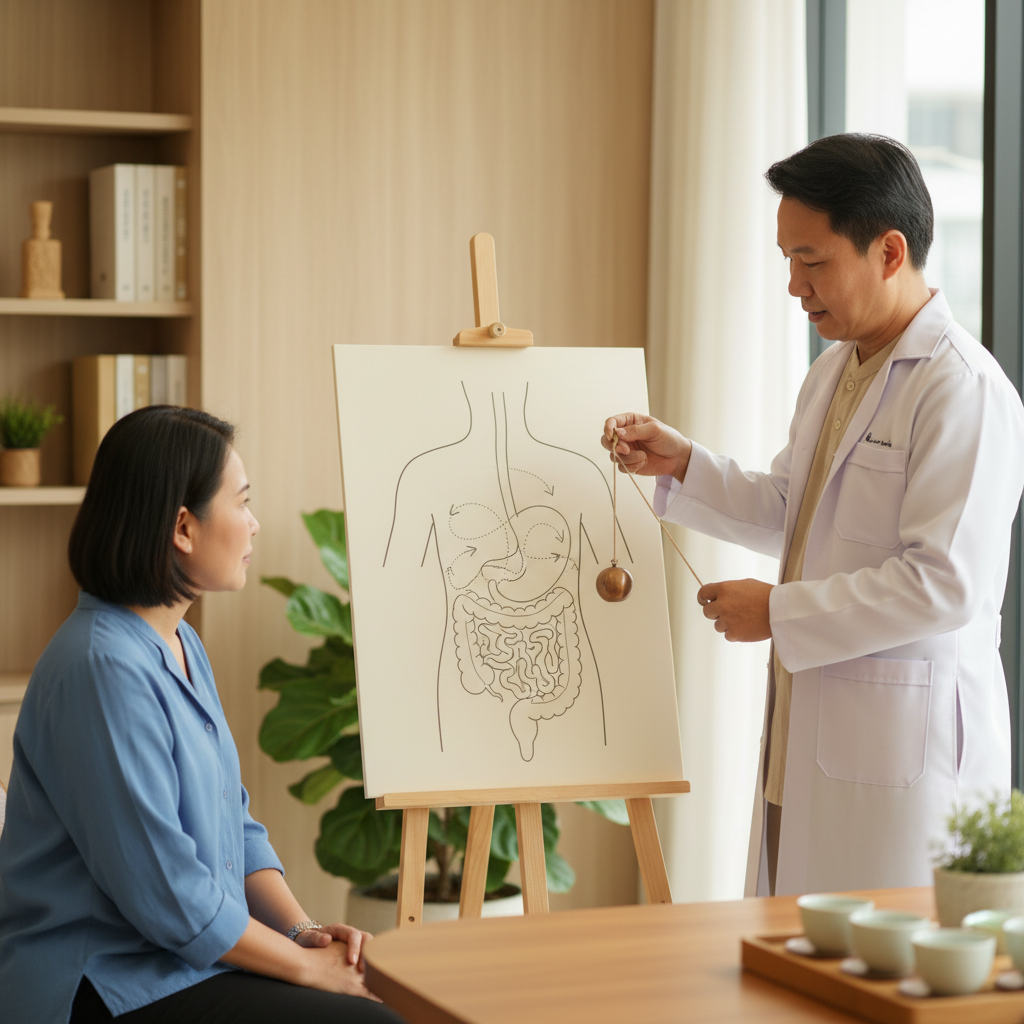
Nausea, Bloating, Discomfort? It Might Not Just Be a Stomach Ache
Experiencing nausea, bloating, and abdominal discomfort? Don't always assume it's just a common stomach issue.

Does Depression Increase Heart Disease Risk? The Link You Need to Know
Depression doesn't just affect your mind; it also increases the risk of cardiovascular diseases. A Thai traditional medicine doctor shares this crucial connection and holistic…

How Does Depression Affect Your Immune System? The Link and Holistic Care
Depression impacts not just mental health, but also weakens the immune system, leading to frequent illness and slower recovery.

Always Thirsty But Still Dehydrated? What Your Body Is Trying to Tell You and How to Care for It
Do you often feel a dry throat despite drinking enough water? This isn't just thirst; it's a vital signal from your body indicating internal imbalance. Learn to listen and respond.